Search This Blog

Friday, March 13, 2026

11.5: Labor Movements- Agricultural Workers


11.5: Labor Movements- Agricultural Workers

Reflection Summary: Labor Movements – Agricultural Workers

This reading explains the history of agricultural workers in California. It focuses on immigrant farmworkers and their labor struggles. It shows how much California agriculture depended on immigrant labor. It also shows how growers took advantage of workers. They used racism, low wages, bad housing, and fear to control them. At the same time, the reading also tells a story of courage, resistance, and solidarity. Farmworkers did not only suffer. They organized, fought back, and built powerful movements for justice.

The reading begins by explaining that California agriculture has depended on immigrant labor since the early 20th century. Chinese immigrant laborers helped build irrigation systems and clear land in the Sacramento-San Joaquin delta. Their labor helped create fertile farmland. But even though their work was important, they still faced anti-Asian racism. As exclusion laws targeted one Asian group after another, growers kept replacing workers with other groups. Japanese, South Asian, Filipinx, and Mexican workers were all used in the fields.

This part of the reading helped me understand that California agriculture was built on immigrant labor. It was not built by growers alone. It was built by workers who often had little power and were treated unfairly. The reading also shows that racism was not accidental. It was part of how the system worked. Growers wanted workers who were poor, vulnerable, and easy to control.

The Bracero Program is another important part of this history. This program lasted from 1942 to 1964. It was an agreement between the United States and Mexico. Mexican men were brought to the U.S. to work in agriculture during World War II. They were treated like temporary labor. They came to work and were expected to return to Mexico. This created a system where workers were needed, but not respected or protected.

The reading says the line between documented and undocumented workers became blurred during this period. This is important because it shows how labor systems can create migration patterns and then punish workers for being migrants. Workers were brought in when their labor was needed, but they were not given full rights or dignity.

The chapter also explains how hard farm work was. Workers bent over in the hot sun for long hours. They were exposed to dangerous chemicals. Families had to move often to follow the crops. Because of this, children missed school. The reading says that by the 1960s, farmworkers in California had a life expectancy of only forty-nine years. This shocked me. It shows how serious the conditions were. Farm labor was not only hard. It was dangerous and harmful to health.

Another important point is how growers used race to divide workers. They did not want workers to unite. So they separated them by ethnicity and gave them different wages and housing. Filipinx workers were often given the worst jobs and the lowest pay. This was a strategy to keep workers weak and divided. It shows how racism and capitalism worked together. Growers made more money by dividing the workers.

The reading then moves to the Delano Grape Strike of 1965. This is one of the most important labor struggles in California history. I learned that the strike was started by Filipinx labor leader Larry Itliong. This is very important because many people only hear about César Chávez when they learn about the farmworkers movement. The reading helps correct this by showing the important role of Filipinx workers and leaders.

Larry Itliong and Philip Vera Cruz were longtime farmworkers and labor organizers. They had spent many years working in the fields and leading strikes. The reading says that Filipinx workers had a strong labor consciousness because they had already gone through many struggles. They were used to organizing for a few cents more in wages each season. This tells me that the Delano strike did not come from nowhere. It grew from years of earlier labor resistance.

The older Filipinx farmworkers were called manongs. This term means “elder brother” in the Illocano language. These men were in their older years by the 1960s. Many had no families of their own because racist anti-miscegenation laws had stopped them from marrying outside their race. They could not vote. They could not own property. Many had no savings and no children to care for them in old age. The reading calls them part of a “lost generation.” I found this part very sad. These workers gave their lives to labor in America, but they were denied so many basic human rights.

This helps explain why the Delano Grape Strike mattered so much to them. They had everything to lose. If conditions did not improve, their future would remain insecure. The reading explains that Filipinx workers won a grape strike in Coachella in 1965. This success gave them confidence. Then they moved north and decided to strike in Delano.

Larry Itliong warned the workers that the strike would be hard. He told them they might get hungry and lose their homes or cars. But the workers still voted to strike. Their response, “We don’t care,” shows their courage and determination. They knew the danger, but they were still ready to fight. This moment stood out to me because it shows how desperate and strong they were at the same time.

The strike was brutal. Growers used violence and intimidation. They attacked workers’ homes. They turned off gas, water, and electricity. Workers lost jobs and homes. Some had to sleep in their cars. This shows how much the growers wanted to break the strike. They did not only fight with money. They used fear and suffering as weapons.

The reading then explains one of the most important moments of the movement: the alliance between Filipinx and Mexican workers. Growers often used Mexican workers as strikebreakers. They wanted one group to replace the other. But the Filipinx workers understood that the strike could not succeed unless Mexican workers joined them. Larry Itliong approached Dolores Huerta and César Chávez and pushed them to support the strike.

At first, Chávez did not want to join right away. He wanted more time to organize. But Itliong argued that workers had to stand together. He said that if Mexicans crossed the Filipinx picket line, then Filipinx workers might later cross the Mexican line. His point was about solidarity. If workers stayed divided, growers would always win.

This part of the reading is one of the most powerful lessons for me. It shows that solidarity is necessary in labor struggles. Workers from different ethnic groups must support each other. If they let racism divide them, they stay weak. But if they unite, they become powerful.

Mexican workers were also taking a big risk by joining. They were poor. They feared job loss and deportation. But they still voted to join the strike on September 16, Mexican Independence Day. This was a very meaningful act. It showed that they were ready to fight together for dignity and justice.

The Agricultural Workers Organizing Committee and the National Farm Workers Association joined together. This created the United Farm Workers Organizing Committee, later known as the UFW. Larry Itliong became second in command under César Chávez. This was a major step in labor history. It created a united front between Filipinx and Mexican workers.

The strike faced many more challenges. Growers brought in replacement workers. Courts limited picketing. Workers were arrested and beaten. Because the strike alone was not enough, organizers created a grape boycott. Consumers were asked not to buy grapes until growers made a deal with the union. This was smart because it brought the public into the struggle. It turned a local strike into a national movement.

The reading explains that Dolores Huerta was very important in organizing the boycott. She helped lead the boycott from 1968 to 1969. It gained support across the country. Millions of consumers joined. This public support helped put pressure on growers. I think this shows how labor movements can become stronger when ordinary people participate. Even people far from the fields could help the workers by refusing to buy grapes.

The reading also talks about the 300-mile pilgrimage march in 1966. This helped the movement gain national attention. César Chávez became a major public symbol of the farmworkers struggle. He spoke about nonviolence and economic justice. He followed the ideas of Gandhi and Dr. Martin Luther King Jr. Later, Chávez went on a 25-day fast in 1968 to keep the movement committed to nonviolence.

The movement finally won contracts in 1970 after five years of struggle. Twenty-six growers signed agreements with the UFW. Wages increased. Workers gained hiring protections based on seniority. There were also stricter rules about pesticides. These were major victories. They showed that workers could fight powerful growers and win.

But the reading also points out a painful truth. The victory did not fully benefit the Filipinx manongs who started the strike. As the movement became more famous, the media focused mainly on Mexican workers and on César Chávez. Filipinx workers were pushed to the side. Many left Delano to survive during the long strike. When they came back, new union rules favored local workers over migrant workers. The manongs lost jobs and even their homes when the labor camps closed.

This part made me feel sad and frustrated. It shows that even inside liberation movements, some people can be forgotten. The Filipinx workers helped begin one of the most important labor struggles in U.S. history, but they did not receive the recognition or long-term support they deserved. Larry Itliong himself said the union became something bigger than him, so he stayed for the farmworkers, even while suffering disrespect. That shows his deep commitment.

The reading then discusses Itliong’s dream of a retirement home for the manongs. The UFW built this home in 1974. At the opening in 1975, one manong said it gave him hope that he would live in a home that felt like his own. This moment was emotional for me because it showed that after a lifetime of struggle, these men wanted simple dignity, security, and belonging.

The sidebar about Dolores Huerta was also very important. Huerta was one of the key leaders of the farmworkers movement, but she often gets less attention than César Chávez. She helped found the National Farm Workers Association. She organized workers one by one, led boycotts, negotiated contracts, and lobbied for laws. She was also a mother of eleven children. Her work was extraordinary.

Huerta faced both racial and gender discrimination. Some people did not think women should be organizers. She had to work through men at times because society did not accept women in leadership. Some of her work was even misattributed to Chávez, including the famous slogan “Sí se puede.” This reminds me how often women’s labor is made invisible, even in social movements.

I think Dolores Huerta’s story is very inspiring. She brought important skills to the movement. She understood long-term planning, resource management, and community care. These are often treated as less important than speeches or public leadership, but they are essential to building real movements.

Overall, this reading taught me that agricultural labor movements were about much more than wages. They were about dignity, survival, race, immigration, solidarity, and justice. California agriculture depended on immigrant workers, but those workers were treated as disposable. Still, they resisted. Filipinx and Mexican workers came together and created one of the most important labor movements in U.S. history.

My biggest reflection is that solidarity across racial and ethnic groups was the key to success. If Filipinx and Mexican workers had stayed divided, the strike would have failed. Their unity helped them win. At the same time, the reading also reminds us to pay attention to whose stories are remembered and whose stories are erased. Larry Itliong, Philip Vera Cruz, the manongs, and Dolores Huerta all deserve more recognition.

In conclusion, this chapter shows that farmworkers played a major role in labor history and social justice in the United States. They endured terrible conditions but still organized for change. Their struggle teaches us about courage, sacrifice, and the power of collective action. It also reminds us that justice must include recognition for all the people who helped build a movement.

California's Dependence of Immigrant Farmworkers
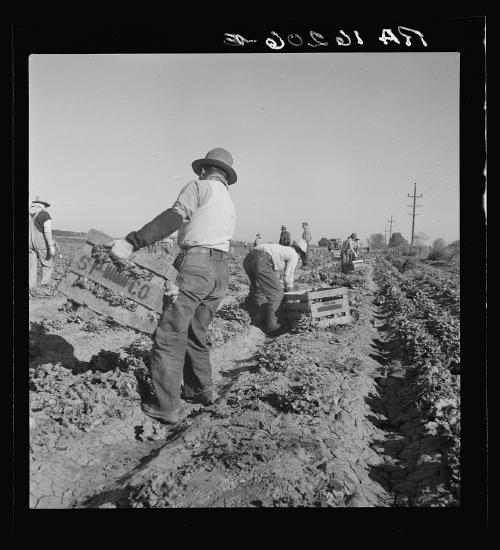
Filipinx farm laborers working on a lettuce field
Figure A crew of Filipinx farmworkers cut and load lettuce in the Imperial Valley, California. 1937. Library of Congress, Prints and Photographs Division, Reproduction Number: LC-USF34-T01-016206-E. (Public Domain; Photo by Dorothea Lange)

Since the early 20th century, the California agriculture sector has largely depended on immigrant farmworkers. This started with Chinese immigrant laborers who shoveled irrigation channels and cleared the land in the Sacramento-San Joaquin River deltas, helping to transform this region into one of the most fertile farmlands in the nation. Anti-Asian racism persisted and with each iteration of Asian exclusion laws, the agricultural industry of California depended on the labor of different groups including Japanese, South Asian, Filipinx, and Mexican laborers. In the 1930s, some 400,000 white laborers impacted by the Great Depression came with the Dust Bowl migration and were also hired to work in the farm fields (Sowards, 2019, p. 19).

The Bracero Program (1942 - 1964) was another important moment in California’s agriculture worker history. A joint agreement between U.S. and Mexican governments resulted in the “importation” of male agricultural laborers, also referred to as braceros, from Mexico to the U.S. to help fill the labor shortage during WWII. The second initiation of recruitment resulted from a U.S. executive order, and was essentially a guest worker program where braceros were hired cheaply to work temporarily and returned to Mexico. During such back and forth migration by Mexican workers, the lines of being documented and undocumented became blurred, resulting in a large-scale migration of undocumented workers to the United States (Quintana, 2018).

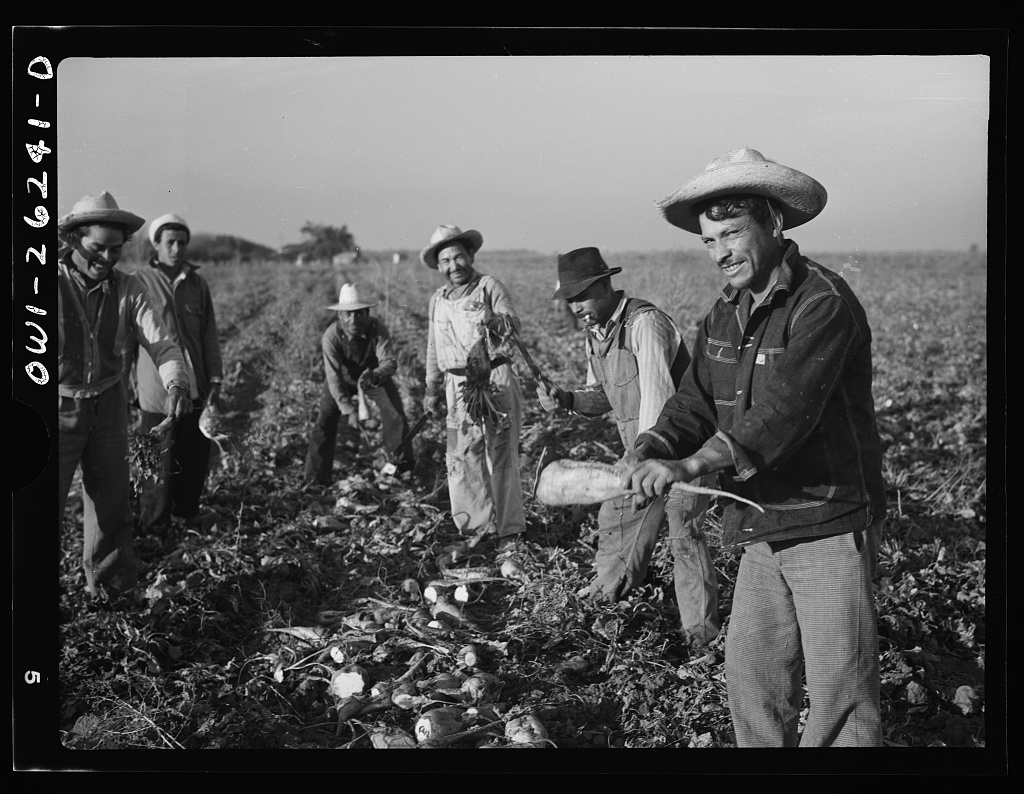
Mexican farm workers topping sugar beets
Figure Mexican agricultural workers in Stockton, California in 1943. Library of CongressPrints and Photographs Division, Reproduction Number: LC-DIG-fsa-8d29109 (Public Domain; Photography by Marjory Collins)

Growers benefited from hiring immigrant laborers with limited access to other work opportunities and civil and human rights. According to Marshall Ganz, “Growers, in other words, learned how to recruit a workforce too powerless to give them much trouble—a workforce of impoverished new immigrants, noncitizens, and people of color” (2009, p. 24). This naturally resulted in not only abysmal pay, but enormously challenging working and living conditions. In addition to the physically tasking labor of bending over repeatedly under harsh weather, workers were exposed to dangerous chemicals, and families were forced to continuously move with the crop seasons, keeping their children out of school. By the 1960s, life expectancy for farmworkers in California was around forty-nine years (Ruiz and Korrol, 2005, p. 241).

Large growers in California had developed a tried and true strategy of hiring workers of different ethnicities and pitting them against each other through segregated housing and a racially and ethnically stratified wage scale, relegating the least desirable jobs and lowest pay to those on the bottom of the racial hierarchy, often Filipinx laborers (Mabalon, 2013, p. 66). Filipinx laborers were a part of “a massive army of seasonal migratory workers toiling up and down the West Coast” (p. 69), working in what writer Carey McWilliams called “factories in the fields.” Growers claimed that Filipinx and Mexican workers were more physically suited for these harsh working conditions that oftentimes kept white workers away (Lee, 2015, p. 180).

The Start of the Delano Grape Strike
The Delano Grape Strike of 1965 is arguably the most important and successful farmworkers' strikes in California labor history. The strike was initiated by Filipinx labor leader Larry Itliong, with the eventual merging of the Filipinx union and the Mexican union headed by César Chávez and Dolores Huerta. The strike ended up lasting five long years, and Chicano Studies historian, Rudy Acuña, pointed out that César Chávez emerged as a civil rights leader and an icon for the Chicano movement (“Struggle in the Fields,” 1995, 19:05 - 19:48). This strike is also recognized by Alex Fabros, Filipino American Labor Historian, as the Filipinx “civil rights movement in California” (Delano Manongs, Arroy and McKay, 2014, 01:22 - 01:26). Yet there is a notable “historical void regarding the role of Filipinos in this important labor movement” (Scharlin and Villanueva 2000, xxv). Larry Itliong and Philip Vera Cruz, both longtime Filipinx labor organizers and farmworkers were instrumental in the development of the United Farm Workers (UFW) union and approaching César Chávez about the grape strike in Delano.

By the 1960s, Filipinx agricultural workers had spent over three decades working crop cycles up and down the west coast, striking “for a few cents more each season,” and therefore had a strong labor consciousness (Delano Manongs, Arroy and McKay, 2014, 08:19 - 08:42). Dolores Huerta, labor organizer with the National Farm Workers Association (NFWA), later with the United Farm Workers, explained how Filipinx workers had a reputation for leading many strikes and were known to be militant (07:29 - 07:52). The strikes would result in wage increases, but workers continued to face challenges because a contract was never signed, which would institute more long-term changes in favor of the workers (07:53 - 08:18).

These older Filipinx farm laborers were also affectionately called manongs by the 1960s, a term of respect meaning “elder brother” in the Illocano language spoken by this community (from Luzon, Philippines). The manongs were in their twilight years by this decade and faced discriminatory policies that banned them from owning property, voting, and the most devastating were the anti-miscegenation laws that banned interracial marriage. This caused what many call the “lost generation” - the second generation of Filipinx people that might have been, had it not been for racist laws. The manongs were largely bachelors with no children of their own (04:19 - 04:55). With no property, barely any savings for their retirement, and no children to rely on, the manongs had everything to lose if their work conditions didn’t improve.

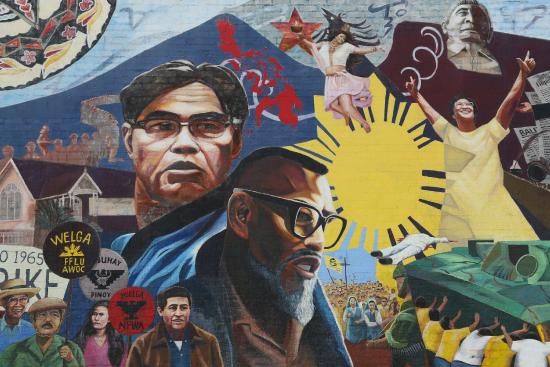
A mural with faces of Philip Vera Cruz, Larry Itliong, and Cesar Chavez and protestors marching for the strike
Figure A mural depicting UFW organizers, Philip Vera Cruz, Larry Itliong, and Cesar Chavez in Los Angles. (Licensed under CC BY-NC-SA 2.0; Photo by Kenny Chang)

Filipinx workers were encouraged when they won a “wildcat” (spontaneous, grassroots) grape strike in Coachella Valley in the summer of 1965. The strikers decided to move north and attempted another grape strike in Delano, under the banner of the largely Filipinx led, Agricultural Workers Organizing Committee (AWOC), AFL-CIO (Chávez, 2005, p. 247). Philip Vera Cruz who had spent over three decades working in the fields and in canneries and restaurants, ended up an organizer with the AWOC, AFL-CIO (Lee, 2015, p. 301-302). Vera Cruz noted that this strike changed his life, reflecting that “As a Filipino it gave me the opportunity to participate in the political struggles of this country” (Scharlin and Villanueva, 2000, p. 33).

Larry Itliong, a dynamic and respected leader of the Filipinx labor movement, known to be tough and always have a cigar in his mouth, was the southern regional director of the AWOC. Like Vera Cruz, Itliong had a long history as a laborer in the United States, starting at age fifteen, working in the farmlands of California and in the Alaskan salmon canneries. Described as brave and strong, Itliong called himself “a son of a bitch…in terms of fighting for the rights of Filipinos in this country” and stated that he wasn’t scared of anyone (Delano Manongs, Arroy and McKay, 2014, 07:12 - 07:27).

On September 8, 1965, Filipinx members of the AWOC met at the Filipino Hall in Delano and made the decision to strike. The night before, Itliong warned strikers that even if they voted to strike, there were plenty of Mexican workers in Delano who would likely break the strike. He told them, “you’re going to suffer a lot of hardships, maybe you’re going to get hungry, maybe you’re going to lose your car, maybe you’re going to lose your house.” Workers replied, “We don’t care” (Mabalon, 2013, p. 261). As Itliong predicted, the strike was brutal. The growers responded with violence, used intimidation tactics, and attacked homes in the labor camps by turning off the lights, gas, and water (Delano Manongs, Arroy and McKay, 2014, 13:41 - 14:26). Strikers lost their jobs and homes, and ended up having to sleep in their cars.

The United Farm Workers: A Filipinx and Mexican labor union
The growers used race to pit workers against one another, regularly hiring Mexican workers to cross the picket line. Filipinx strikers understood that in order for their strike to be successful, they needed Mexican workers to join them. Filipinx and Mexican community members of Delano would socialize together, but out on the fields, they were segregated (Delano Manongs, Arroy and McKay, 10:09 - 10:22). Itliong knew Dolores Huerta from when she used to be an organizer for the AWOC. He approached Huerta and Chávez days after the grape strike in Delano began with a determination to convince the NFWA to join the strike. Chávez initially said no, that they needed more time to organize. Huerta pointed out that the NFWA had planned to organize discreetly and wanted five more years to organize the whole San Joaquin Valley before striking (Ruiz and Korrol, 2005, p. 247).

Itliong convincingly argued “that if the Mexicans did not stand with the Filipinas/os, if they were scabs while the Filipinas/os struck, then when the Mexicans went on strike, the Filipinas/os would be scabs” (Mabalon, 2013, p. 261). Fabros provided context by stating,

…you have to remember, the Filipinos were getting old. For them, for every penny, for every quarter, for every dollar, for every lug that they got paid extra, that went into the retirement fund (Delano Manongs, Arroy and McKay, 2014,15:53 - 16:30).

For Mexican workers and the NWLA, it would be risky to join the strike. They didn’t have a strike fund nor any savings to support a walkout. Artist Ester Hernandez, who was a child of farmworkers during this era explained that, “...the bosses of the fields were threatening everybody left and right that they would lose their jobs, or that they would not be hired, or there were even threats of deportation….So it was pretty frightening” (The Struggle in the Fields, 1995, 09:01 - 09:25). Eliseo Medina, a labor organizer with the NFWA, remembered being moved by Chávez’s words at a union meeting, sharing that he gave everyone hope that they could win despite their fears (10:17 - 10:53). Hernandez added that her family realized there was a lot at stake, but that, “even if we starved to death, that we would not be alone….we had to stay and fight because otherwise nothing was going to change” (11:28 - 11:52).

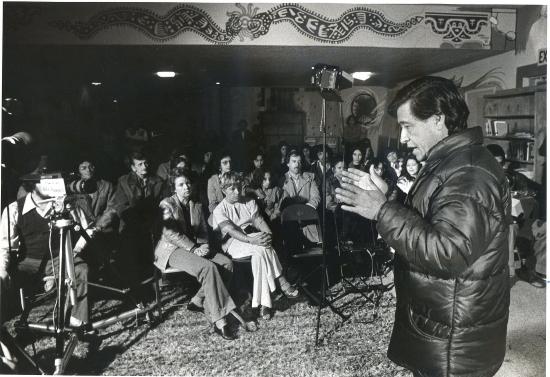
Chavez speaking to an audience
Figure United Farm Workers Organizing Committee (UFW) president, César Chávez. (Licensed under CC BY-SA 4.0By Movimiento)

Mexican workers voted to join the strike on September 16 (Mexican independence day) and then Filipinx and Mexican workers were united, fighting for the same cause. The AWOC and NFWA combined and formed a new union, the United Farm Workers Organizing Committee (UFW), with Larry Itliong as second in command under César Chávez (Delano Manongs, Arroy and McKay, 2014, 18:38 - 18:45).

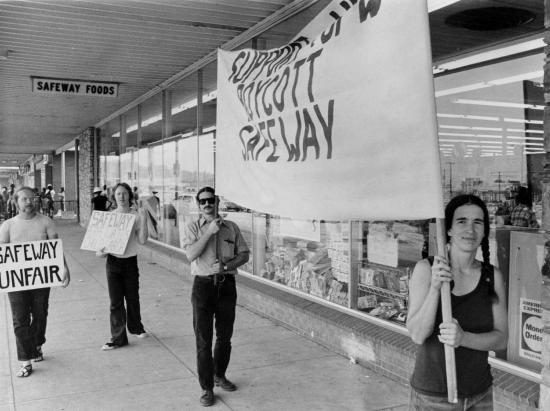
Strikers met challenges on the fields, as growers brought in bus loads of replacement workers and attempted to halt the effectiveness of the strike with legal injunctions, limiting where strikers could picket. Strikers were also met with violence and arrests (The Struggle in the Field, 1995, 20:42 -22:08). Soon strike organizers orchestrated a grape boycott campaign, involving the average consumer who were encouraged to boycott purchasing grapes at their local supermarket until a deal was made with the UFW. Then governor of California, Ronald Reagan, would eat grapes in photo ops as often as he could, stating that he thought the boycott was immoral (Delano Manongs, Arroy and McKay, 2014, 19:38 - 1944).

With the peregrinación or Easter pilgrimage march in 1966, the movement gained mainstream visibility, changing “the course of American labor history” forever (Ruiz and Korrol, 2005, p. 248). A 300-mile march to the state capital resulted in Chávez emerging as the leader and the farmworkers’ struggles became a symbol of the Chicano civil rights movement. Acuña emphasized that in addition to addressing the farmworkers’ demands, Chávez also discussed larger economic justice issues and talked about non-violence (The Struggle in the Fields, 1995, 19:36 - 19:48).

An important aspect of this movement was non-violence, especially in contrast to the violence inflicted by growers and local police. It was important that, “Both César Chávez and Huerta adhered to the principles of Mahatma Gandhi and Dr. Martin Luther King Jr” (Ruiz and Korrol, 2005, p. p. 247). In an effort to maintain non-violence principles, Chávez made a decision to go on a fast on Valentine’s Day, 1968. When Chávez broke his fast after 25 days, he attended mass, along with 4,000 supporters, including Senator Robert Kennedy, showing that the workers believed in Chávez’s leadership (The Struggle in the Fields, 1995, 39:32 - 44:15).

Protestors encouraging shoppers to boycott Safeway
Figure UFW picket line urging a boycott of the Langley Park, MD Safeway Store which was carrying non-UFW grapes, Summer 1973. (Licensed under CC BY-NC 2.0; Photo by G. Dunkel/Workers World, retrieved from Washington Area Spark)
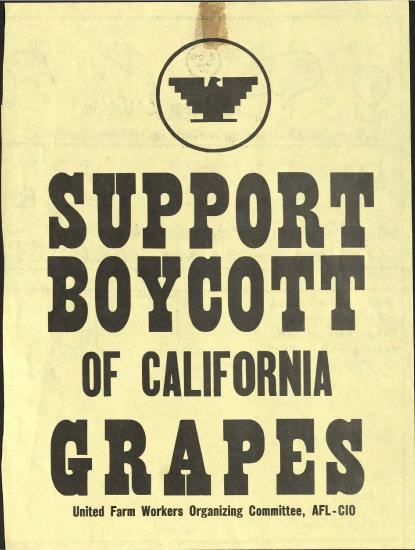
A UFW flyer from 1969. Details in caption.
Figure A UFW leaflet with the phrase "Support Boycott of California Grapes" passed out in the Washington, D.C. are circa 1969 during the years-long boycott of California table grapes in an effort to secure a labor contract for farmworkers. (Licensed under CC BY-NC 2.0; Image retrieved from Washington Area Spark)

Huerta successfully conducted an industry-wide grape boycott from 1968 - 1969, which received nationwide public support, with an estimated 17 million consumers supporting the boycott in 1970, shipments falling by 22% (Ruiz and Korrol, 2005, p. 248). After five long years of the strike, multiple growers signed contracts with the UFW and their grapes were officially union approved, stamped with the UFW label, “signaling the union’s approval to consumers” (p. 248). Twenty-six growers signed contracts with the UFW, raising wages to $1.80 an hour and $0.20 per box. They also secured hiring provisions around seniority when hiring workers, and placed strict protocols on the use of harmful pesticides (Ruiz and Korrol, 2005, p. 248 - 249).

Growers and farmworkers signed the contracts in the union hall in Delano on July 29, 1970, almost five years after the strike began. There was hope for this momentous ending to the most important farm working struggle. Eliseo Medina, a labor organizer noted the movements’ impact: “I think the greatest achievement is in the change that it made on people. Teaching them how they could fight, how they could stand up for their rights and win” (The Struggle in the Fields, 1995, 50:55 - 53:58).

For the Filipinx manongs, the signing of the contracts didn’t result in their favor. As the boycott gained national coverage, the media was focused on Mexican workers. Itliong commented: “To hear what’s going on, newspapers and TV and everything, it’s done by Mexicans. Nothing is being done by us. So naturally the Filipinos started drifting away” (Delano Manongs, Arroy and McKay, 2014, 20:16 - 20:28). Manongs left Delano in order to work the crop cycle and survive, essentially walking out of one of the longest strikes in labor history. Once contracts were signed in 1970, and the manongs returned to Delano for the new grape harvest season, they found that they were pushed out of work (21:38 - 21:48). New union rules favored local farmworkers over migrant workers, so the manongs ended up losing their jobs. Worse still, farmers closed the labor camps so Filipinx workers lost their homes as well. Fabros explained that many of the manongs held Chávez in high regard and didn’t want to say anything negative. He stated that ultimately the strike had achieved a union, a goal for the manongs, but, "I don’t think it was in the image that they wanted. They didn’t control it. We started it, we lost in the end" (21:49 - 22:51).

Of the frustrations Itliong faced working in the UFW, he said, “To tell you the truth, I’ve never taken the shit that I’ve been taking in this organization. But I do it, because I think it’s bigger than me for the farmworkers to have an organization. It’s the reason I do it” (22:51 - 23:08). Itliong eventually left the union and continued to work for the Filipinx community. He left behind a vision for a retirement home for the manongs and the UFW built this home in 1974. Richard Chávez commented that many volunteers came to help build it. At the opening celebration in 1975, a manong shared that this home gave him hope “That I’m going to be in a home that I might call my own, our own” (23:33 - 23:46).

Sidebar: Dolores Huerta

A portrait of activist, Dolores Huerta in a blazer, smiling
Figure Dolores Huerta at the Montclair Film Festival in 2017. (Licensed under CC BY 2.0; Photo by Tony Turner/Montclair Film)

Dolores Huerta has been described by Alicia Chávez, professor of American Studies and Ethnicity, as “Unflappable as a union organizer…unapologetic as she lived against the grain…she leaves an indelible legacy of labor-organizing in U.S. history” (Ruiz and Korrol, 2005, p. 240). Huerta played an instrumental role in the success of the farmworkers movement of the 1960s, yet as noted by author Stacey K. Sowards, César Chávez is the established public figure representing the movement, and Dolores Huerta, on the other hand, had “received relatively little attention” (2019, p. 1).

Born April 10, 1930, in Dawson, New Mexico, Huerta was named Dolores Fernández. Her father was a coal miner, but also worked as a farm laborer and was involved in labor issues. When her parents divorced, Dolores moved to Stockton, California, where she was raised among the diverse farm working community of the Central San Joaquin Valley. Although Dolores was not a farmworker herself, her upbringing was influential in her decision later in life to be a labor organizer.

Dolores earned an Associate’s degree and provisional teaching credentials at the College of the Pacific in Stockton and she taught English to the children of migrant farmworkers, giving her insight into their lives (Ruiz and Korrol, 2005, p. 243). But she eventually left teaching to go into community organizing. Dolores helped mobilize Chicanx communities for voter registration campaigns, addressed police harassment, and advocated for access to healthcare. After meeting César Chávez, they founded the National Farm Workers Association (NFWA) in 1962, in Delano, CA, which eventually became the United Farm Workers, or UFW. Huerta ended up dedicating 40 years of her life to this organization, playing “...an integral role in the UFW, as cofounder; vice president; key negotiator with growers; advisor to Chávez; lobbyist in Washington, DC, and Sacramento; and boycott organizer” (Sowards, 2019, p. 2).

The NFWA joined the Delano Grape Strike in 1966 and Dolores was known as an intrepid organizer, helping to formulate the UFW’s base by talking to people one by one. She conducted door-to-door canvassing, traveled to speaking engagements, and became the first woman and Chicana to organize a union contract with California growers in 1970. And all while a mother to eleven children. Dolores continued lobbying for laws that would protect farmworkers, which eventually led to the passage of the Agricultural Labor Relations Act of 1975. She also spoke up for women’s rights (Ruiz and Sánchez Korrol, 2005, p. 241).

Despite such major accomplishments, her leadership was largely ignored and she faced various challenges due to racial and gender discrimination. In one interview Dolores shared that she faced backlash for being an organizer from her family, farmworkers, as well as religious leaders. She had to work undercover through her husband and brother because organizing wasn’t considered appropriate for women (Sowards, 2019, p. 31). Furthermore, much of Dolores’s contribution to the movement “may have been misattributed to Chávez” including the slogan, “Si se puede” (p. 8).

Of Dolores’s legacy, Alicia Chávez wrote: “She championed the often unrecognized skills that women brought to the union from their own life experiences, such as management of limited resources, organization, and vision for the long-term well-being of their families” (Ruiz and Korrol, 2005, p. 252). It’s certainly not an overstatement to acknowledge Dolores Huerta’s role and the unique skills she brought to the table in one of the most important labor movements of U.S. history.

No comments:

Post a Comment