10.8: Summary/Review
Reflection Summary: Summary and Review of Incarceration, Policing, and State-Sanctioned Violence
This chapter summary brings together many important ideas about prisons, policing, race, and justice in the United States. After reading this section, I understand more clearly how the prison system is not only about crime and punishment. It is also about power, racism, history, and inequality. The chapter shows that prisons and policing have been shaped by slavery, white supremacy, settler-colonialism, and discrimination against poor communities and communities of color. This reflection helped me think more deeply about what justice really means.
One of the biggest ideas in this chapter is the Prison Industrial Complex, also called the PIC. This means the connection between government, private businesses, policing, surveillance, and prisons. These systems work together and often treat social problems like they should be solved through punishment. Instead of helping people with poverty, mental health, housing, education, or addiction, society often responds with police, jails, and prisons. This was one of the strongest lessons for me. It made me realize that incarceration is not only about safety. It is also about control and profit.
The chapter explains that mass incarceration has affected mostly Black Americans and poor communities of color. This did not happen by accident. It happened through specific laws, policies, and practices. Politicians, media, and police helped create the idea that imprisonment is normal and necessary. They often made people of color look dangerous or criminal. Because of this, many people accepted prisons and policing as the answer. This chapter helped me understand how powerful media and political messages can be. They shape the way society thinks.
Another very important idea in the chapter is that imprisonment and policing do not necessarily make communities safer. This surprised me because many people grow up hearing that police protect us and prisons keep dangerous people away. But the chapter says that many researchers and activists have shown that policing and incarceration often do not solve the real problems. Instead, they can increase harm, trauma, and inequality. This made me think that safety should not only mean punishment. Real safety should mean support, resources, and fairness.
The chapter also explains that many scholars see policing and prisons as extensions of white supremacy, slavery, Jim Crow, and settler-colonialism. This is a very serious statement, but after reading the chapter, I understand why they say this. Earlier sections showed that policing grew out of slave patrols, colonial violence, and control of poor and nonwhite people. Prisons also continued the legacy of slavery through convict leasing and prison labor. So when we look at prisons and police today, we must also look at history. The past is still shaping the present.
The section on the War on Drugs was one of the most important parts of the chapter. The War on Drugs criminalized drug use in political ways and targeted poor communities of color. The chapter explains that this so-called war did not affect everyone equally. Black and Brown communities were policed more heavily, arrested more often, and punished more severely, even though white people also used and sold drugs. This shows that drug policy was not only about drugs. It was also about race and power.
Because of the War on Drugs, millions of people were incarcerated or placed under correctional control. The chapter explains that after serving time, these people often still face discrimination in jobs, housing, education, and public benefits. This means punishment does not end when someone leaves prison. It continues in everyday life. I think this is one of the saddest truths in the chapter. A person may serve their sentence, but society still keeps punishing them.
The chapter uses Michelle Alexander’s idea that the justice system now works more to control the dispossessed than to prevent crime. This idea stayed with me. It means that the system focuses on controlling poor and marginalized people rather than helping communities or reducing harm. This made me think differently about the criminal justice system. It is not always acting equally or fairly. It often treats some groups as problems to manage.
Another major point in the chapter is the role of racial profiling. The chapter explains that police often stop, search, and question people based on race, ethnicity, religion, or national origin. Black and Latinx people are often profiled while driving or walking. Arabs, Muslims, and South Asians have also been profiled, especially after 9/11. This shows that suspicion is not spread equally. Some groups are treated as more suspicious than others just because of how they look or where they come from.
The chapter also discusses stop-and-frisk, which allowed police to stop and search mostly Black and Latinx people in New York. Even though the policy was later found unconstitutional, it caused a lot of harm. It created fear, humiliation, and criminal records for many people. This shows how policies can look legal for a long time even when they are unfair and harmful.
Another important point in the chapter is the unfairness in the conviction process. Many people do not get good legal representation. Poor defendants may be pressured to plead guilty, even when they are innocent, because they fear harsher punishment. Prosecutors also have a lot of power. The chapter says that even when there is strong evidence of racial disparities in sentencing, courts make it very hard to challenge racial discrimination unless someone openly admits racist intent. This means the system can produce racist results while still calling itself fair or colorblind.
The chapter also made a strong point about crimmigration. Crimmigration means immigration law and criminal law become mixed together. Immigrants, especially undocumented immigrants, are treated like criminals simply because of their immigration status. The chapter says that this process makes immigrants seem like lawbreakers and limits their rights. This was important for me because it shows that criminalization is not only about prisons or police. It also happens through immigration laws and detention systems.
I also learned more about convict leasing. This system forced incarcerated people to work for private and public benefit. Many scholars say it was a continuation of slavery. Even today, prison labor is still used in many areas, from making products to fighting wildfires. This made me realize that labor exploitation is still part of the prison system. Incarcerated people are often treated as a cheap workforce, which is unfair and dehumanizing.
One of the most painful sections in the chapter was about the school-to-prison pipeline. This means school policies and punishment push many students into the criminal justice system. Students of color, LGBTQ students, and students with disabilities are punished more often and more harshly. The chapter explains that school police, suspensions, expulsions, and zero-tolerance policies can all push children out of school. This is very disturbing because schools should be places of support and growth.
I think this part matters a lot because it shows how early criminalization can begin. A child does not need to be an adult to enter the system. It can start in school. The chapter explains that children are now increasingly policed in schools, and this has led to tragic outcomes. Students are arrested for small things like disrespect, cell phone use, or classroom behavior. This is not the kind of care that children need.
The chapter also discusses the Youth Control Complex, which describes how many institutions work together to punish and criminalize young people, especially Black and Latino boys. But it also introduces the Youth Support Complex, which offers hope. This means creating systems that support young people through mentors, educational programs, after-school activities, and affirmative opportunities. I really liked this idea because it shows that there are better ways to respond to youth than punishment.
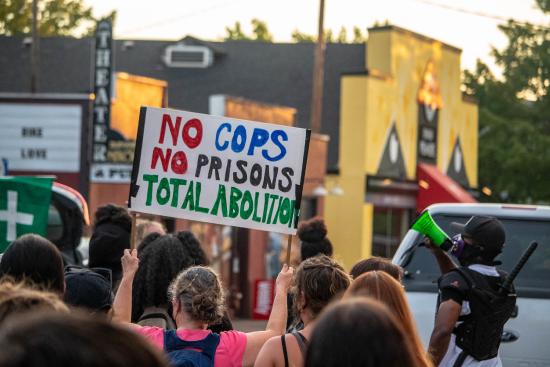
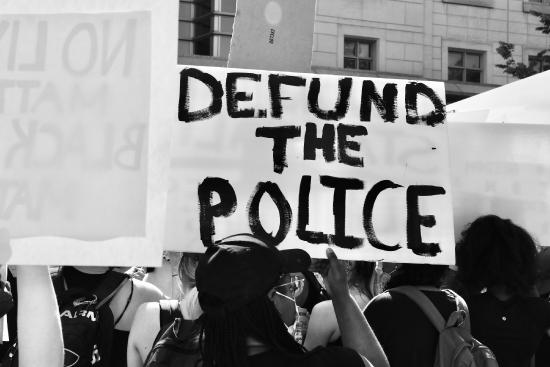
Another very important idea in the chapter is abolition. The abolition movement asks people to imagine a future without policing and prisons as the main answers to harm. At first, this may sound unrealistic to some people. But the chapter explains that abolition is not about doing nothing. It is about building new systems based on care, justice, and healing. This includes investing in education, housing, jobs, healthcare, and community safety programs.
The chapter also talks about restorative justice. Restorative justice is based on practices that focus on repairing harm, taking responsibility, and rebuilding relationships. It is especially important as an alternative in schools. Instead of suspending or arresting students, restorative justice asks what happened, who was harmed, and how the harm can be repaired. I think this is a very meaningful approach because it treats people like human beings who can learn and change.
The chapter reminds readers that communities have always resisted oppression. There are activists, organizers, teachers, youth, and scholars who continue to fight against unfair systems. Some work to abolish prisons and police. Others work to remove school police and create restorative justice programs. This part gave me hope. It shows that even though the problems are serious, people are working hard to create change.
The list of key terms in the summary was also helpful because it put many ideas together clearly. Terms like Prison Industrial Complex, criminalization, convict leasing, crimmigration, racial profiling, stop-and-frisk, school-to-prison pipeline, Youth Control Complex, Youth Support Complex, abolition, and restorative justice all connect to the same larger issue. They show how systems of punishment and control work in many different areas of life. Learning these terms helped me better understand the whole chapter.
One thing I reflected on after reading this chapter is how easy it is for society to accept injustice when it is presented as normal. Prisons, police, school punishment, immigration detention, and harsh sentencing can become ordinary in people’s minds. But this chapter challenges that idea. It asks readers to look deeper and question what has been normalized.
I also reflected on the idea of second-class status. The chapter asks whether we know people who cannot vote, get a job, find housing, or access benefits because of a past conviction. This made me think about how punishment can continue long after a sentence ends. It can trap people in poverty and exclusion. That is not true justice. True justice should allow people to heal, grow, and rebuild their lives.
Another important lesson from this chapter is that myths about the criminal justice system are very powerful. Many people believe prisons hold only dangerous people, police exist mainly for safety, and punishment solves crime. But the chapter shows many truths that challenge these ideas. Many people in the system are there because of nonviolent offenses, racial profiling, poverty, immigration status, school discipline, and lack of support. This changes how I think about crime and punishment.
In conclusion, this chapter summary helped me understand the larger picture of incarceration, policing, and state-sanctioned violence. It showed that the Prison Industrial Complex is connected to racism, history, profit, and control. It also showed that the War on Drugs, racial profiling, harsh sentencing, crimmigration, and school punishment have all harmed poor communities and communities of color. At the same time, the chapter gave hope by discussing abolition, restorative justice, and youth support systems. My biggest lesson from this chapter is that justice should not only mean punishment. Real justice should mean fairness, dignity, healing, and opportunity. This chapter made me reflect on how society can move away from fear and punishment and toward care, support, and equity.
If you want, I can now combine 10.1 to 10.8 into one full final reflection paper with the same simple style and smooth f



- Ulysses Acevedo & Kay Fischer
- ASCCC Open Educational Resources Initiative (OERI)
Conclusion
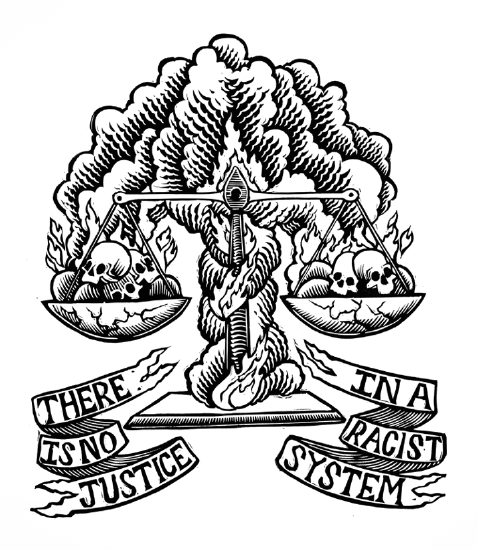
In this chapter we reviewed the various institutions, policies, laws, and practices that have led to the creation of the Prison Industrial Complex and mass incarceration of largely Black Americans and poor communities of color. The media and rhetoric by politicians and police have helped to normalize imprisonment and criminalization of people of color, when in fact decades of research and activism has proven how ineffectual imprisonment and policing are when it comes to increasing safety. Instead, many scholars and activists cited in this chapter have expressed that policing and caging people is an extension of white supremacy, slavery, Jim Crow, and settler-colonialism.
We’ve reviewed the ways in which drug use has been criminalized for political reasons in the War on Drugs. Due to this shift and continued heavy policing in poor communities of color and extraordinary discretion given to law enforcement, we’ve witnessed the normalization of caging millions of people and allowing system-impacted people to be legally discriminated against after having served their time.
This chapter has also explained the ways in which our punishment system is, as Angela Y. Davis (2003) argues, entrenched in antiblack racism, and other racialized histories of minoritized people. Michelle Alexander poignantly states that the U.S. justice system is “no longer concerned…with the prevention and punishment of crime, but rather with the management and control of the dispossessed” (2020, p. 233). We see this in how policing is drenched in the legacy of systemic violence related to settler-colonialism, worker suppression, slavery, and anti-immigrant practices, including practices that target women and girls, and members of the LGBTQ community. We see institutional racism tied to policing that targets people of color for stop-and-search, even though whites are more likely to use and carry weapons and drugs. We also see racial discrimination in the conviction process, as many are denied legal representation and forced to plead guilty or snitch for a lesser sentence. Despite pages of data proving racial discrepancies in sentencing, the Supreme Court has made it impossible to challenge racial discrimination practiced by law enforcement unless it’s explicitly admitted.
Furthermore, this chapter has reviewed the ways in which children are increasingly policed in our schools with shocking and tragic outcomes that push more youth into the criminal justice system.
Still, this chapter has also reviewed the ways in which our communities have and continue to resist policing and caging and fight back against systemic oppression. Some examples are prison abolitionists organizing for a prison and police free future. Others are working toward dismantling school police and instead instituting effective programs like Restorative Justice. The authors of this chapter hope readers will see how these struggles are intrinsically tied to anti-racist movements for justice and equity.
Key Terms
- Prison Industrial Complex (PIC): the overlapping interests of government and industry that use surveillance, policing, and imprisonment as solutions to economic, social and political problems.
- Criminalization: Criminalization is the act of making something or someone illegal. It also applies to practices, prejudices, and policies that frame certain groups of people as a criminal, or someone who doesn’t deserve to have rights or be treated with respect. Many scholars and activists point to how poor people, undocumented immigrants, and people of color are often criminalized by politicians or specific policies that scapegoat communities without much political power. Criminalization of such communities rely on the perpetuation of negative stereotypes that simply being undocumented, or Black, or poor is viewed as criminal. Criminalization leads to over-policing in poor communities of color, racial profiling of Arabs, Muslims, and South Asians at the airports, punitive policies against youth of color, and mass deportations of Latinx communities.
- Convict Leasing: A practice of forced labor, where incarcerated people are leased to work for private and public institutions, typically for the financial benefit of the carceral system. Many scholars agree that the convict lease system was a reincarnation of slavery, and some of the similar methods of labor control and intimidation were used. Prisoner labor essentially supported agricultural labor and industrialization in the South. Today, we continue to rely on prisoner labor for countless products, to fight wildfires under dangerous conditions, and they’ve been on the frontlines of pandemic response, manufacturing masks and other PPE that prisoners were not allowed to use to protect themselves. Prisoner labor is also relied on to maintain the costs of running a prison.
- Crimmigration is the merging of immigration law with criminal law and posing immigrants as lawbreakers usually through a racialized lens. Through various laws and policies, crimmigration promotes the notion that an individual must be a citizen in order to be prequalified for basic civil and constitutional rights such as privacy, due process, and the right to not incriminate oneself.
- The War on Drugs: A “colorblind” vehicle that’s driven millions, particularly poor people of color, into the prison system. A shift in the modern criminal justice system framed drug abuse as “public enemy number one” during Richard Nixon’s presidential term in 1971. Exposed to decades of media “images of Black men in handcuffs” and the narrative that “bad guys” are in prison, the “new normal” includes: the rapid establishment of prisons, jails, and immigration detention centers, the Drug Enforcement Agency, over-policing of communities of color, legalized discrimination against system-impacted people in employment, housing, and public benefits, mandatory minimum sentencing, and plea deal bargains.
- Slave Patrols: These were early policing groups that would extend the reinforcement of racist restrictions, or slave codes, against enslaved African Americans both on and off plantations. Slave patrols were created to suppress slave rebellions and they would surveille, intimidate, search for weapons or evidence of learning how to read and write, and interrogate and lash anyone they pleased. They also worked to prevent runaway slaves from crossing into the North. Slave patrols turned into some of the earlier policing agencies in the South.
- Racial Profiling: The discriminatory practice by law enforcement of stopping, interrogating, arresting, harassing, or searching an individual based on their race, ethnicity, religion or national origin. Some examples of racial profiling including border patrol stopping someone with “Mexican appearance,” highway patrol pulling over Black and Latinx drivers, the Stop-and-Frisk policy of targeting Black and Latinx pedestrians, and Arab, Muslim, and South Asian people being targeted at airports or for detention and minor immigrant violations.
- Stop-and-Frisk: A policy enforced by the New York Police Department that allowed officers to use discretion on deciding who to stop, interrogate, and search. The practice almost exclusively targeted Black and Latinx people, who were regularly harassed by the police, for some, multiple times in the same day. This routine contact between the police and men of color served as “a gateway into the criminal justice system” and as a way to collect personal information on individuals not yet in the criminal database, which create barriers for jobs, housing, and access to resources. Similar practices have been endorsed in other police departments across the nation. The practice has been found unconstitutional as of 2013.
- School-to-Prison Pipeline: A set of institutional practices, policies, and culture that inflict methods of punishment that end up disproportionately being enforced against poor students of color, LGBTQ, and disabled students. Such punitive institutional practices often lead disenfranchised students to be entangled in the criminal justice system.
- Youth Control Complex: A term coined by Victor Rios, it is a system of criminalization molded by the synchronized, systematic punishment meted out by socializing and social control institutions. Examples are parole officers, police officers, school principals, teachers, parents, social workers, and the media.
- Youth Support Complex: Approaches or resources used to interrupt the hypercriminalization of young Black and Latino boys and the school to prison pipeline. Examples are mentors, educational programs, affirmative action programs, and after school programs.
- Abolition (Movement): Dr. Dylan Rodriguez defines it as "the work of constantly remaking sociality, politics, economy, place and (human) being against the duress that some call dehumanization, others name colonialism, and still others identify as slavery and incarceration."
- Restorative Justice is a growing alternative to school police and punitive policies against youth and based on indigenous practices from across the globe. Restorative justice programs address underlying causes and involve students as responsible members of the community. They may implement peer juries, problem-solving circles, conflict mediation or community service. The core principle is creating a welcoming space for students to work on issues in a cooperative manner, in a way that is in the best interest of the student and the school community.
Discussion Questions
- The first book from Kaepernick Publishing is called Abolition for the People: The Movement for a Future Without Policing & Prisons. Many important authors involved in the abolition movement are included in this work such as: Angela Davis, Kimberlé Crenshaw, Mumia Abu-Jamal, Robin D.G. Kelley, among others. One purpose of this work is to “ensure that the book before you is useful and that it inspires you to take action to build a world without and beyond police and prisons” (Kaepernick, 2021, . The book argues “that the efforts to reform police and prisons have nearly always enhanced their power, reach, and legitimacy”. Furthermore, Abolition for the People asks the following questions: What is abolition? Is abolition practical? and What does abolition look like in the real world? Please answer the three above questions to the best of your abilities.
- According to this chapter, what is crimmigration? How have immigrants been criminalized in the United States? Please provide specific examples (policies and laws). How have immigrants pushed back against laws that criminalize them because of their immigration status?
- Summarize and explain 2-3 myths and truths about our criminal justice system, such as “prisons work to put away ‘bad’ guys so that the rest of us can be safe.”
- What is the School-to-Prison pipeline and explain 2-3 practices that create hostile schools, especially for students of color and special needs students.
Journal Prompts
- Are prisons racist institutions? Can we eliminate one without the other?
- What can we do to abolish prisons, resist the prison industrial complex, or dismantle what Michelle Alexander calls the “New Jim Crow” – this social system used to control racial minorities in the U.S.?
- Are you, or is anyone you know locked in a second-class status—unable to vote or legally discriminated against in employment, housing, education, or access to public benefits?
- Did you attend a school with School Resource Officers (SROs)? If so, what was your experience with campus police or what did you observe?
Class Activities
In-person - Racial Profile while Driving
- In small groups students will review the California maps providing geographical information on Driver’s License Suspension Rates and Poverty Rates. What patterns do you see? What problems do you see in the patterns found in the map? (15 minutes)
- Students then read and take notes from the Back on the Road website and understand “the problem” of this project and the solutions. Also, please review the section of this chapter titled "Driving While Black or Brown" on page 10.5 "Is Policing Inherently Racist?" (10 minutes)
- Students share their small group analysis with the class. Any experiences being pulled over? Students should explore the following themes someone may experience while being pulled over: racial profiling (driving while black/brown), immigrant status profiling, socioeconomic class profiling, etc. (15 minutes)
In-person - Four Corners:
It is suggested to conduct this activity before students read this chapter and learn about Incarceration, Policing, and State Sanctioned Violence. “Four Corners” is an activity that allows students to move around the classroom and discuss their opinions or share their experiences with different classmates in response to general statements read by the instructor. The statements may be generalizations or based on stereotypes related to Asian Americans and Pacific Islanders.
Materials:
4 pieces of paper
Tape
Statements (use ones below or write your own)
Instructions:
Write the following words on a piece of paper (one per paper) and tape in the four corners of the classroom: “Agree,” “Disagree,” “Strongly Agree,” and “Strongly Disagree”
Instruct students to gather in the center of the classroom and listen to each statement (see samples below) read by the instructor. Once a statement is read, students will quietly decide which corner they move to. For example, if a student “agrees” with the statement read by the instructor, they will move into the corner labeled “Agree.” Students must choose a corner - if they are stuck between two, ask them to move to a corner that’s the closest to how they feel about the statement.
Once students choose a corner, they may discuss the following with people in their corner:
Why did you choose this corner?
Why do you think others chose their corners?
After giving students 5 minutes or so to discuss in smaller groups, the instructor can ask a representative from each corner to share a summary of what was discussed in their respective corners. A healthy debate may ensue after students hear each of the corners’ responses and individuals may decide to move if they’ve changed their minds based on what is shared by their classmates.
Repeat steps 2 to 4 for each statement.
Once completed, you may have students debrief on this experience.
Review these Vocabulary words before the 4 Corners Statements:
- Punishment: penalties imposed as a result of a criminal offense (i.e., incarceration). The goal is to penalize the offender and to deter others from committing criminal offenses.
- Rehabilitation: actions and programs designed to change the behavior of an offender or help them with specific issues. The goal is for offenders to successfully re-enter society as productive citizens.
- Restorative Justice: specific approaches (such as mediation and sentencing circles) that focus on the offender understanding and addressing their actions harmed the victim and community. The goal is reconciliation and healing for all parties involved.
Sample Statements:
- Our public schools and public colleges/universities should have police presence at all times.
- The point of the criminal justice system is to punish criminals. Offenders should be punished harshly to deter others from committing crimes.
- Our correctional system should have opportunities for education, therapy, and other types of rehabilitation.
- Someone who commits a crime deserves a second chance if they apologize for their actions. Criminal offenders should have the opportunity to work with victims and do things to make amends for their actions.
- When previously incarcerated people re-enter society they usually have a lot of support from society.
- Because of the internet, previously incarcerated people have an easy time getting a job.