Search This Blog

Friday, February 6, 2026

6.3: Contested and Competing Meanings in Chicanx and Latinx Studies


6.3: Contested and Competing Meanings in Chicanx and Latinx Studies 

Reflection Summary on “6.3: Contested and Competing Meanings in Chicanx and Latinx Studies”

The reading “6.3: Contested and Competing Meanings in Chicanx and Latinx Studies” explains that Chicanx and Latinx Studies is not one simple field. It is interdisciplinary, and it includes many viewpoints. The authors explain that this discipline includes history, political science, psychology, and other areas. This means the field studies people and communities from many angles. It does not focus on only one subject. It combines different types of knowledge to understand identity, power, culture, and social conditions. This reading helped me see that Chicanx and Latinx Studies is not only about learning facts. It is also about debating meanings and asking hard questions.

The chapter explains that Chicanx Studies is especially common in the U.S. Southwest. This includes California, Arizona, Texas, and New Mexico. The reason is because these areas have long-standing and large Chicanx populations. The chapter also explains that part of the Mexican population in the Southwest lived there before the United States took land through the Treaty of Guadalupe Hidalgo. This is important because it challenges the idea that Mexican-origin people are always “newcomers.” Some families lived in these lands before the border changed. This point matters because it connects identity to land, history, and power. It also shows that the history of conquest and treaties still shapes modern life.

The reading also explains that Puerto Rican Studies is more visible in states with larger Puerto Rican populations, such as New York. It also explains that Latinx Studies is a broader discipline. Latinx Studies overlaps with Chicanx Studies but includes many Latinx groups in the United States. The chapter says there are many nuances in these terms. It also says identity, community, and culture can create shared connections, but they can also create disagreement. This is the main purpose of this section. It shows that even inside the discipline, people do not always agree about definitions. This made me realize that identity terms are not neutral. They have history. They have politics. They have emotion. They also have consequences in real life and in education.

One key debate discussed in this chapter is about Chicanismo. The reading explains that Chicanismo is an ideology connected to Chicana/o/x identity. The chapter includes a quote explaining that Chicanismo involves a political consciousness. It describes a difference between a “Mexican American” mentality and a “Chicano” mentality. In this description, the “Mexican American” is described as someone who seeks assimilation and lacks respect for cultural heritage. The “Chicano” is described as someone who has pride, self-respect, and political action. This is controversial because not all Mexican Americans agree with this definition. Some people do not want a political label. Some people may be conservative. Some people may not want activism connected to their identity. This debate helped me understand that identity terms can also judge people. Sometimes a label becomes a way to separate “good” and “bad” members of a community. This can create tension. It can also exclude people who do not fit a certain political style.

Another major debate in the chapter is about the terms Chicana/o/x and Xicana/o/x. The reading explains that Chicanx is commonly accepted as a term that signals political awareness and often refers to U.S.-born persons of Mexican descent. The chapter also explains origin stories of the term. It mentions that students at Texas A&M used the term in the early 1960s, and that it was reclaimed from a pejorative meaning. It became connected to Aztlán as a homeland story. This matters because it shows that the term Chicanx is not only ethnic. It is also historical and symbolic. It is connected to pride and resistance. It is also connected to Indigenous roots in the imagination of the movement.

The reading includes a quote from George Mariscal that describes the Chicano identity as unstable and in motion, like a tide moving between Mexico and the United States. This description shows the border experience as a living condition. It shows that identity is not fixed. It is shaped by migration, racism, and cultural pressure. I connected with this idea because many people live between cultures. They may feel like they belong to two places, but also not fully belong to either. That experience can create pain, but it can also create strength. It can create creativity and resilience. This chapter helped me see how Chicanx identity has been shaped by history and the border.

The chapter explains that Xicana/o/x often means the same thing as Chicana/o/x, but it uses the letter X to honor Indigenous roots. The X is connected to Nahuatl language sounds. This is important because it shows how spelling can be political. People use spelling choices to show values. They can show respect for Indigeneity. They can also challenge colonial language patterns. This made me think about how small changes in words can carry big meaning.

The reading also explains a major controversy in universities. Many campuses had to decide whether to keep “Chicanx Studies” as a department name or change to “Latina/o Studies” or “Latinx Studies” to be more inclusive. The chapter gives an example of San Francisco State University. The Department of La Raza Studies was renamed Latina/o Studies in 2011. The chapter suggests one problem is that “La Raza” can translate to “race,” and that may create confusion or controversy. It also explains that CSU Los Angeles changed its department name to Chicana/o and Latina/o Studies as a gesture toward inclusivity. This debate is important because names affect who feels included. But names also affect political history. Some people may see name changes as progress. Others may see them as erasing Chicanx roots and activism. This made me understand why these debates can be emotional. They are not only about language. They are about identity, history, and power inside institutions.

The chapter also mentions controversy around M.E.Ch.A. and possible name changes. The reading describes debates about removing “Chicanx” and “Aztlán” to be more inclusive of Afro-Latinos, Indigenous Latinos, queer Latinos, and Latinx people from different countries. This shows that communities are always changing. It also shows that older terms sometimes feel too narrow for younger generations. At the same time, older generations may feel protective of movement history. This is a real conflict in many communities. It is not easy to balance inclusion and tradition. This chapter helped me see that both sides can have reasons. People want belonging, and people also want to protect important history.

Another section of the chapter discusses Reis López Tijerina. The reading explains that he organized Spanish-speaking families across the Southwest to seek land repatriation connected to the Treaty of Guadalupe Hidalgo. The chapter also explains he was more supportive of armed opposition than César Chávez, and he was involved in a courthouse raid in Tierra Amarilla, New Mexico in 1967, which resulted in gunfire and hostages. The chapter also notes he formed alliances across ethnic boundaries, including with African American militants such as the Nation of Islam. This part of the reading shows that resistance movements have different strategies. Some leaders use nonviolence. Some support militant resistance. These differences can create debate inside movements. This made me reflect on how activism is complex. People may share goals, but they may disagree on methods.

A major section of the reading focuses on the meanings of Latina/o/x/e and Hispanic. The chapter explains that Latinx is a pan-ethnic identity that includes people with origins in Latin America. It includes people from Spanish-speaking and non-Spanish-speaking countries, such as Brazil and Haiti. It does not include Spain. This definition is important because it shows Latinx is not only a language category. It is a regional and historical identity shaped by colonization and diaspora.

The chapter also explains that Latinx emerged from online LGBTQIA+ discussions around 2004. One reason was to challenge gendered language in Spanish. “Latino” is masculine, and “Latina” is feminine. Latinx uses “x” to avoid the male default. The reading also argues that the “x” can honor Indigenous languages, and it can make marginalized groups more visible, especially queer, trans, Black, and Indigenous Latinx people. The chapter mentions that the term became more mainstream after the 2016 Pulse nightclub shooting in Orlando, which targeted queer and trans Latinx people. This part of the reading shows that language sometimes spreads through tragedy and activism. It also shows that language can be a tool for safety and recognition.

The chapter also explains why Latinx is controversial. Some people say it is not linguistically natural in Spanish. Some people feel it is imposed. Some call it linguistic imperialism. Some believe “Latino” is already fine and not offensive. This debate is very common today. This reading helped me understand why the debate is intense. It is not only about grammar. It is about identity, power, and who gets to define a community. Some people prefer “Latine” because it fits Spanish pronunciation better. Others prefer Latino/a. Others use Latinx as a political statement. This shows that language is alive and contested.

The reading also discusses Central American Studies as an emerging discipline. The chapter notes that it bridges Ethnic Studies and area studies. It also explains that Central American migration often came from civil wars and U.S. political interventions. This is important because it shows that Latinx identity cannot be understood only through Mexican American stories. Central America has its own histories, traumas, and migration causes. The chapter suggests that new disciplines emerge when communities demand visibility. This connects back to the roots of Ethnic Studies and activism.

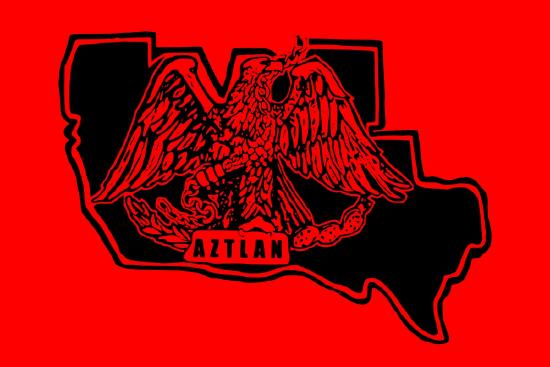
Another central concept is Aztlán. The reading explains that Aztlán is described by Gloria Anzaldúa as the place of origin of the Aztecs. The story includes the journey guided by Huitzilopochtli, and the omen of an eagle with a serpent on a cactus. The chapter explains that during the Chicano Movement, Aztlán was said to be in the U.S. Southwest. This symbol helped Chicanos claim that they were not foreigners. It positioned them as connected to the land through Indigeneity. This is powerful because it reverses the narrative of “outsider.” It says, “We belong here.” But the chapter also explains controversy. Some scholars see Aztlán as mythical. Also, not all Mexicans are Aztec or Indigenous. And the Southwest includes many Indigenous nations that existed before both the U.S. and Mexico. This shows that even symbols of liberation can create conflict. A symbol can empower one group, but it can also erase another. This made me reflect on how identity politics can be complicated and must be handled carefully.

The chapter also discusses La Raza. The reading explains that La Raza has been used to describe a broad community united through Spanish colonization and racial mixing. But it is controversial because it comes from José Vasconcelos’s idea of “La Raza Cósmica.” The reading explains that this ideology promotes mestizaje as a utopian project, but it can reproduce racial hierarchy and erase Blackness. It can also connect to harmful beliefs about race being biological and about “improving” people through mixing. This section was important because it shows that some popular cultural terms have hidden histories. People may use La Raza with pride, but it can also carry ideas that cause harm. This is a strong example of why Chicanx and Latinx Studies debates meanings. It teaches students to look deeper.

The final major concept is Chicana/o/x and Latina/o/x/e feminism. The chapter explains that Chicanx feminism cannot be reduced to one definition. Women of different races, classes, and sexualities organized in many ways. Chicanx feminists often worked inside multiple movements at the same time. They pushed white feminism to address racism. They pushed the Chicano movement to address sexism. They pushed both to address homophobia. The chapter gives examples of how Chicanas faced suppression and delegitimization. It mentions that Ana Nieto-Gómez faced strong backlash even though she was elected president of M.E.Ch.A. It also notes the imbalance in public recognition between César Chávez and Dolores Huerta. This helped me reflect on how women’s labor is often erased, even inside justice movements.

The chapter includes a sidebar about Dolores Huerta. It explains her role as a co-founder and organizer and her famous chant “¡Sí se puede!” It also explains that this slogan was used later without proper credit. This shows how women’s work can be taken and repackaged by powerful people. At the same time, the chapter shows that Huerta later gained recognition, including the Medal of Freedom. This section shows both struggle and resilience.

The chapter also includes an example of the Young Lords Party, which had a platform point demanding equality for women and challenging machismo. This is important because it shows that not all Latinx movements ignored gender justice. Some organizations tried to address patriarchy directly. This shows that liberation movements can learn and improve. It also shows that gender equality is part of community liberation, not separate from it.

Overall, this chapter taught me that Chicanx and Latinx Studies is full of debates because identity is complex. Terms like Chicanx, Latinx, Hispanic, Aztlán, and La Raza are not simple words. They carry history, politics, and struggle. The chapter shows that even inside one community, people can disagree about terms. Some disagreements are about inclusion. Some are about tradition. Some are about language. Some are about race and Indigeneity. Some are about gender and sexuality. This reading helped me understand that disagreement does not mean the field is weak. It means the field is alive. It means people are actively trying to define themselves with dignity.

This chapter also helped me reflect on how important it is to listen. When terms are contested, we should not assume one answer is correct for everyone. We should respect people’s self-identification. We should also understand the historical reasons behind each term. Chicanx and Latinx Studies teaches students to think critically and ethically. It teaches students to examine power and representation, even inside language itself. This reading made me more aware that words shape reality. They shape belonging. They shape whose stories are centered. For that reason, this chapter is important for understanding the larger discipline.


Works Cited

Viveros Espinoza-Kulick, Mario Alberto, and Ulysses Acevedo. “6.3: Contested and Competing Meanings in Chicanx and Latinx Studies.” Introduction to Chicanx and Latinx Studies, ASCCC Open Educational Resources Initiative (OERI), CC BY-NC 4.0.

Nuances in Chicanx and Latinx Studies
Since its inception, Chicanx and Latinx Studies has maintained its interdisciplinary nature, incorporating perspectives of history, political science, psychology, and others (Cal State LA, Department of Chicana/o and Latina/o Studies, n.d.). Chicanx studies are common in the U.S. Southwest such as in California, Arizona, Texas, and New Mexico due to the area’s long standing large Chicanx population sizes. A small portion of this Mexican population in the Southwest predated the land seizures by the U.S. due to the Treaty of Guadalupe Hidalgo. Puerto Rican Studies is more visible in states with larger populations of Puerto Ricans, such as New York. Latinx Studies is a broader discipline that overlaps and covers all Latinx groups in the United States. There are many nuances to the use of these terms and the two approaches to the discipline, which will be discussed below.

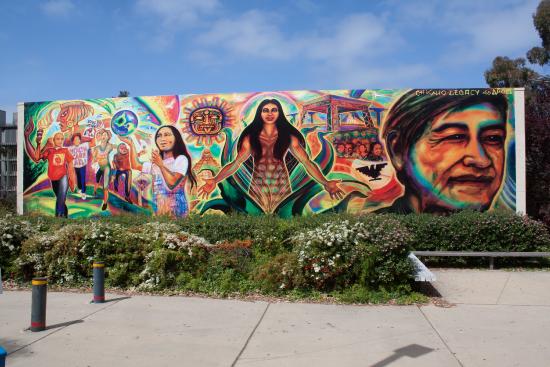
mural of Cesar Chavez on the right, a woman coming out of a corn husk in the middle, people marching to the left
Figure Chicano Legacy 40 Años. (CC BY 2.0Jay Galvin via Flickr)

Just because Chicanx and Latinx Studies launched as a discipline rooted in well-considered principles stemming from the Chicano Movement, one cannot understate the vast diversity, complexity, and nuance of identity that exist within the umbrella of Latinx. While identity, community, and culture are sites of commonality within the discipline, they are also sites of contention.

What follows are some of the key concepts subject to debate amongst scholars and practitioners of Chicanx and Latinx Studies:

Chicanismo

What is it?

Chicanismo is an ideology applied to what it means to identify as Chicana/o/x:


Chicanismo involves a crucial distinction in political consciousness between a Mexican American and a Chicano mentality. The Mexican American is a person who lacks self respect for his cultural and ethnic heritage. Unsure of himself, he seeks assimilation as a way out of his "degraded" social status. Consequently, he remains politically ineffective, in contrast, Chicanismo reflects self-respect and pride in one’s ethnic and cultural background… The Chicano acts with confidence and with a range of alternatives in the political world (Muñoz, Jr., 2007, p. 97).


Why is it controversial?

Because Chicana/o/x signifies a Mexican American who is political and takes action to further a specific agenda, there are Mexican Americans who are apolitical and/or who are explicitly conservative who object to the term and what it represents.

Chicana/o/x and Xicana/o/x

What does it mean?

The term, Chicanx, is commonly accepted as “connoting political awareness or consciousness and refers to U.S.born persons of Mexican descent” (Vargas, 2017, p. xxi). There are numerous origin stories of the term, but according to Juan Gonzalez in his book Harvest of Empire: A History of Latinos in America, students at Texas A&M started calling themselves Chicanos in the early '60s. Gonzalez attributes university students identifying as Chicanxs to the fact that they were one of the biggest demographic groups on campus and because they gained control of the student government. They started using the term Chicano in order to reclaim a word that was originally pejorative towards those that were born north of the Rio Grande border, inverting it by rooting it in the positive of their existence within Aztlan, or the place stories claimed was the Homeland of Aztec peoples. In this way, Chicanx became a way for them to connect with their Indigeneity and heritage South of the Border (Gonzalez, 2022, p. 117). Please see the section on Aztlan for more of the origin story and controversy around it.

In his book Brown Eyed Children of the Sun: Lessons from the Chicano Movement, 1965-1975 (2005), George Mariscal expands on the tension inherent for those of Mexican origin residing in the United States. The following quote helps us further understand a Mexican perspective on the Chicano identity:

According to Mexicans, the word "chicano" was born from a corruption. It is a corruption of "mexicano: Small Mexican? Chi-cano? On the contrary, the word has no fixed origin and surfaced among the people to name a reality: the intensification of mestizaje [mixture] … But the chicano is like the tide in the sea of history, like a shore that never ends, in perpetual movement, it frees itself from the Mexican ocean, arrives on the American beach, and although something remains, the rest returns to the open sea but before it can arrive, as in a cyclical return, it rises again. Thus the chicano is an instability (and has been for more than a century), an anomaly… like the Rio Bravo and Rio Grande, the wall between two culture. Thus the chicano is a human "no man’s land," the border in living flesh (Mariscal, 2005, 29).

Xicana/o/x is generally understood to mean the same thing as Chicana/o/x, with the spelling variation used to pay homage to indigenous roots by using the letter X, which is a sound found in the Nahuatl language.

Why is it controversial?

Colleges and universities with a history of Chicanx Studies courses and departments, especially in the Southwest, have had to choose whether to keep the name of Chicanx Studies or build on the work of Chicanx Studies and, in the spirit of inclusivity, change the name to Latina/o Studies or Latinx Studies.

One case in particular that can be examined is La Raza Studies at San Francisco State University. Although La Raza Studies was the genesis of the fight for Ethnic Studies and creation of it, the Department of La Raza Studies was renamed Latina/o Studies in Fall 2011. Perhaps one flaw in the name La Raza Studies is that it translates to English as “the race studies.” In the spirit of inclusivity of University students from Spanish-speaking backgrounds, the College administrators and faculty decided to move forward with Latina/o studies. There are additional critiques of La Raza, see that section below. However, as of 2016, the Mexican American Studies department at CSULA has changed its name to the Department of Chicana/o and Latina/o Studies (CLS), presumably also as a gesture of increased inclusivity of non-Mexican Latinx communities. Many other universities have similarly shifted their name to include Latina/o/x studies.

Chicanx is not only contested in the context of academic disciplines. According to an article on remezcla.com titled “Why student group M.E.Ch.A’s proposed name change has set off a fierce, multi generational debate,” by Aaron E. Sanchez, “Several chapters voted in favor of removing the terms ‘Chicanx’ and ‘Aztlán’ from its designation. While there is currently no final decision on the change or what the new name would be, many are putting forth words that are more inclusive of Afro-Latinos, Indigenous Latinos, Queer Latinos, Latinos from different Latin American countries, and more” (Sanchez & Martinez, 2019).

Reis López Tijerina (9/21/1926 - 1/19/2015)

He was probably one of the leading experts on the Treaty of Guadalupe Hidalgo out of necessity. According to his memoir, They Called Me King Tiger: My Struggle for the Land and our Rights (2000), Tijerina “organized Spanish-speaking families across the Southwestern US to seek repatriation of land obtained by North American anglos in violation of the treaty of Guadalupe Hidalgo” (Tijerina, 2000, p. vii). Tijerina is seen in contradiction to César Chávez’s peaceful protest efforts and was in favor of more violent, sometimes armed opposition (Haney-López, 2003, p. 158). He organized under La Alianza Federal de Mercedes or The Federal Land Grant Alliance and argued that the Treaty of Guadalupe Hidalgo guaranteed Mexican property rights. In June 1967, Tijerina stormed a courthouse in Tierra Amarilla, New Mexico to make a citizen’s arrest of an abusive district attorney with an ensuing gunfight and twenty held hostages. As a result, Tijerina was convicted to two years imprisonment (Haney-López, 2003, p. 159). Tijerina formed alliances across ethnic boundaries, specifically with African American Militants such as the Nation of Islam (NOI) (Mariscal, 2005, p. 187).

Latina/o/x/e and Hispanic

What does it mean?

The term Latinx is a pan-ethnic identity that includes many people whose origins are from Latin America, including Mexico, Central America, the Caribbean and South America. It is not a purely linguistic distinction - people with origins in countries where Haitian Creole, French, Portuguese, English, and many indigenous languages, such as Haiti, Brazil, Jamaica, and many others, are included, whereas someone from Spain would not be.

Latinx first emerged from online LGBTQIA+ discussion forums around 2004 (Yarin, 2022). One reason the term was developed was to drop the traditional heteronormative patriarchal dichotomy of identifying simply as a male or female. Furthermore, Latino is based on Latin languages; it is a gendered identifier. The “o” at the end of the word in Spanish signals a male identifier, in contrast to Latina, which because of the “a” at the end signifies female.

According to an article titled The Word Latinx IS a Betrayal to Latinidad, That’s Exactly the Point by J.A.O. the use of “x” in Latinx


... was a conscious decision. It was an homage to Indigenous Nahuatl languages, and functioned as a linguistic visibilization of the communities most directly impacted by colonial violence, and the land theft, enslavement, and blanqueamiento that go along with stamping out Indigenous lives. By abandoning the “o” in favor of the “x”, the word “Latinx” achieves a true neutrality, rather than embracing the masculine default as neutral (J.A.O., 2021).


Furthermore, J.A.O. states that Latinx became mainstream after the 2016 Pulse nightclub shooting in Orlando, Florida after a shooter targeting queer and trans Latinx killed 49 people and wounded 53 more.

Additionally, Latinx is an identity that has provided a self-identifier in order to combat anti-Blackness and anti-Indigeneity, in turn,  because Latinx is not a racial or national signifier. “I would never really be Puerto Rican so long as my Blackness was unambiguous to most people....The word 'Latina' also felt wrong because femininity felt wrong....I only knew discomfort, alienation, and isolation. So when I finally found the vocabulary, it was a relief....‘Latinx’ is a protest against those who are willing to go down with the ship: the people who are hellbent on maintaining the oppression of the most marginalized among us in Latin America and the diaspora (J.A.O.)

Although Chicanxs fit under the umbrella term of Latinx, not all would identify themselves as being Latinx. In the US, Latinx studies emerged in higher education in order to provide a pan-ethnic area of study for Mexicans, Central Americans, the Caribbeans, and South Americans. The term Latinx has also been used as it has been developed to describe college courses.

Why is it controversial?

Although Latinx and Latine have found a place in higher education and in the media, these terms have received backlash, especially online. On social media platforms, some claim that they will never adopt the term, that it is linguistic imperialism and that the term doesn't make any sense linguistically. Furthermore, some who oppose Latinx claim that “Latino” is not offensive to anyone and that it should not change because it is linguistically accurate.

A recent discipline that has emerged at University of California, Los Angeles (UCLA) is Central American Studies (CAS). According to the UCLA library website, "Central American studies (CAS) is an interdisciplinary field that bridges ethnic studies and area studies. Because it does not fit neatly into disciplinary and institutional categories, CAS inhabits different spaces in each of the institutions where it has emerged. Central American Studies goes beyond the borders of the U.S. although in Ethnic Studies we usually focus within the U.S." In Harvest of Empire (2011), Juan Gonzalez states that Central Americans did not have a “collective desire for the material benefits of U.S. society; rather, vicious civil wars and the social chaos those wars engendered forced the region’s people to flee" (p. 129). The Central American civil wars that caused hundreds of thousands to flee and end up in the U.S. were military and political interventions fabricated by the US. Lastly, Central American Studies refers to the perspectives and study of issues affecting nations and communities of the Central American Isthmus” (Osorio, n.d.).

Aztlán

illustration of an eagle on a cactus with a chain in its mouth, red background
Figure Flag Of Aztlan used by La Raza Unida and other Chicano activists. (Public Domain; Sukanara via Wikimedia Commons)

What does it mean?

According to Gloria Anzaldúa in her book Borderlands / La Frontera: The New Mestiza, Aztlán was the “Edenic place of origin of the Aztecs” and that the “Aztecs left the US Southwest in 1168 A.D.” (Anzaldúa, 2012, p.4). The Aztecs leave Aztán in search of a new homeland. Huitzilopochtli, the Aztec hummingbird deity (and the God of War), guided them, until they found their omen of an eagle eating a serpent on a cactus (p.5). Anzaldúa states that


The eagle symbolizes the soul (as the earth, the mother). Together, they symbolize the struggle between the spiritual/celestial/male and the underworld/earth/feminine. The symbolic sacrifice of the serpent to the “higher” masculine powers indicates that the patriarchal order had already vanquished the feminine and matriarchal order in pre-Columbian America (p. 5).


The Aztecs kept on course until they found their omen on a small island, on what was Lake Texcoco. They would eventually build the capital of their empire, Tenochtitlan, in the middle of Lake Texcoco and expand the city using chinampas (floating gardens). During the Chicano Movement of the 1960s and '70s, Aztlán was said to be in the Southwest United States, including Colorado, California, Arizona, Texas, Utah, New Mexico, Oregon and parts of Washington State. Aztlán served as a powerful symbol to Chicanos because it positioned them not as foreigners to the Southwest but instead as tied to the land through indigeneity.

Why is it controversial?

Some scholars believe that Aztlán is purely mythical, although others believe it is a historical account of a major migration. Not all Mexicans or Chicanos are of Aztec heritage or any indigenous heritage at all, and there are indigenous peoples and nations pre-existing in the lands of the Southwest United States.

La Raza

What does it mean?

La Raza is a term used interchangeably with Mexicans, Hispanics, Hispanidad, Latinx, and Chicanx, and it can connote a broad community of Latinx peoples united in their experience of Spanish colonization and racial mixing. During the Chicano Movement the term was used widely to emphasize shared heritage.

Why is it controversial?

La Raza is derived and shortened from the phrase “La Raza Cósmica.” La Raza Cósmica or The Cosmic Race was a book and an ideology published in 1925 by Jose Vasconcelos, an intellectual, philosopher, and at one point Mexico's Minister of Education. His racial ideology is widely accepted as being an ideological project promoting “mestizaje” (or the racial mixing of European, Asian-descended, Native Americans, and Africans) as a means to a utopian society. La Raza Cósmica “condones a biopolitical order that, despite its decolonial intentions, ends up reproducing the Western racial hierarchy” (Quintana-Navarrete, 2021, p. 85). Furthermore, one problematic aspect of La Raza Cósmica ideology is that it promotes the notion that race is biological and that it is also spiritual and “arguing that they prove the fact that hybridization between antithetical types [races] tends to create better individuals” (p. 85). In other words, only by diluting indigenous racial and spiritual characteristics could indigenous communities be improved and absorbed into Mexico’s mainstream culture. As a result of this theory, Vasconcelos did promote racial miscegenation as a method to hybridize racially and create a fifth race or the “cosmic race” building from theories used to uphold eugenics policies that were used in the U.S. and Germany (p. 85).

However, the Chicano Movement did appropriate Vasconcelos’ concept of the fifth race as a way to unite under a shared identity deemphasizing European heritage and emphasizing Indigenous heritage rather than following Vasconcelos' implication that Indigeneity is improved when mixed with something better. However, others argue that this, and contemporary uses of mestizaje, still enable narratives that erase the existence of blackness and racism.

Chicana/o/x and Latina/o/x/e Feminism

What does it mean?

In the same way that there is no single definition or history of “feminism,” Chicanx feminism cannot be confined to a single definition. Women of varied races, classes, sexualities, and ideologies have always organized in many ways for many different goals (Gershon, 2022). It is no different or perhaps even more pronounced for Latinx feminists, because of the pronounced racial differentiation within its communities. But the most basic goals of Chicanx feminism have been the ability to fully participate in and lead the Chicanx Movement and the Chicanx academic discipline, and for the experiences, histories, needs, goals, and lens of Chicanx feminists to be centralized within that of Chicanx as a whole.

Chicanx feminists have often sat within multiple movements simultaneously, the Chicanx movement, the feminist movement, the feminist of color movement, the LGBTQ movement, and others. This multifaceted movement orientation gave Chicana feminists a unique position from which to push other activists to be more thoughtful (Gershon, 2022). In "The Foundations of Chicana Feminism," Livia Gershon distills the work of feminist and lesbian writer Cherrie Moraga’s into three calls: for white feminist movement to examine its own racism, for the Chicano movement to address its sexism, and for both to challenge their homophobic tendencies (Gershon, 2022).

Chicanx feminism can be traced back to the Chicanx Movement of the 1960s; however, many Chicanx scholars have uncovered the roots of Chicanx herstories winding back through Spanish colonialism of the Caribbean, North, Central, and South American. In her foreword to “The Chicana Motherwork Anthology,” Ana Castillo firmly roots the Latinx woman and her activism in her experience of, and resistance to, colonization:


The blood on these lands - South, North, and Central America and the attendant islands near and around- the sweat and tears of original peoples; the buried placentas and ombligos of newborns; the wails of madres sufridas and the war cries of guerrilleras; the prayers of sacerdotas, brujas’ incantations, remedios de curanderas, y el hecho y en resumen, echoed or muffled, have all served as the foundation of . . . all the action produced by women of consciousness, day in and day out (Caballero, 2019, Foreword).


Why is it controversial?

Chicanx feminism has always created space in the community and in higher education, but it has simultaneously always faced individual or group suppression to Chicanx machismo. Many male Chicano activists expressed that they felt Chicana feminist groups were either trivial or harmful to the broader movement. Even when Chicanas were participating in “Chicano” groups within the Movement, they faced delegitimization. For example, although Ana Nieto-Gómez was elected president of M.E.Ch.A. in 1969, the year the group was formed, an effigy of her was hung by male students who felt a woman should not represent their organization (Ruiz, 2006). Another example of this in popular culture is the amount of media attention and accolades Cesar Chávez received for decades in comparison to Dolores Huerta, his co-founder of the National Farmworkers Association (which later became the United Farm Workers or UFW). However, in more recent years, Dolores has been given more mainstream recognition.

Sidebar: Dolores Huerta

Dolores Huerta (b. 4/10/1930) was born in New Mexico and before she was the right hand person of Cesar Chávez and the UFW, she was a schoolteacher. Huerta met Cesar Chavez while they both worked at Community Services Organization (CSO) where they gained labor organizing experience, even when CSO did not fully support that work (Rosales, 1997, p. 132). Huerta “was assigned to lobbying the California Legislature for pro-migrant worker legislation” and through that work CSO demonstrated that it could register and organize Mexican Americans to vote as a group (p. 132). After Chavez resigned from CSO, he recruited Huerta to help build the efforts of the National Farm Workers Association (NFWA). Huerta was at the side of Chavez when the UFW organization was in its infancy and the main support Chavez relied on was his wife Helen Chavez and Huerta (p. 134). Through all of this, Huerta birthed and raised 11 children.

Huerta is known for creating the demonstration chant “¡si se puede!” or “yes we can!” Yes we can was the slogan used by President Barack Obama’s campaign without giving the proper attributions to Dolores Huerta. Huerta was invited to the White House to receive a Medal of Freedom. President Obama stated in his remarks about the legacy of Dolores Huerta “Dolores was very gracious when I told her that I had stolen her slogan “¡si se puede!” “Yes we can!” knowing her I’m pleased that she let me off easy because Dolores does not play” (23 ABC News, 2012). Huerta continues to speak at local and national conferences about her involvement in the movement and politics.

Not all Latinx social movements and groups have resisted feminist goals and practice. A good example of what a Latinx community organization and movement of the 1970s looked like with gender equality as a central component is the Young Lords Party. From their 13-Point Program, Point Number 10 directed their organizational efforts to fight patriarchy within their movement head-on. The following is the text from Point Number 10,


We want equality for women. Machismo must be revolutionary... not oppressive: Under capitalism, our women have been oppressed by both the society and our own men. The doctrine of machismo has been used by our men to take out their frustrations against their wives, sisters, mothers, and children. Our men must support their women in their fight for economic and social equality, and must recognize that our women are equals in every way within the revolutionary ranks (13 Point Program and Platform of the Young Lords Party, 1969).


Now that we have explored some of the more nuanced and contested concepts within the discipline of Chicanx and Latinx Studies, we will learn about some of the core concepts that define the discipline. For more analysis on Chicana Feminism and Mestiza Consciousness, please see Chapter 8 Section 8.3, "Intersectionality and Third World Feminism."

No comments:

Post a Comment