Search This Blog

Friday, March 13, 2026

11.3: U.S. Civil Rights and Liberatory Movements


11.3: U.S. Civil Rights and Liberatory Movements

Reflection Summary: U.S. Civil Rights and Liberatory Movements

This reading teaches about many important movements in United States history. These movements fought for justice, equality, and freedom. They challenged racism, segregation, poverty, police violence, and unfair treatment. They also showed that different communities of color did not stay silent. They organized, protested, and demanded change. This reading helped me understand that liberation movements were powerful and necessary. They changed laws, but they also changed people’s minds and communities.

The reading begins with the Civil Rights Movement. Many people say the modern Civil Rights Movement started with the Montgomery bus boycott in 1955. Rosa Parks is often remembered because she refused to give up her seat to a white passenger. Her action helped start a major boycott. Black people in Montgomery refused to ride the buses. This boycott became one of the most important protests in U.S. history. It challenged segregation and showed the power of collective action.

At the same time, the reading reminds us that Rosa Parks was not the first person to resist bus segregation. There were earlier actions and court cases before her. This is important because it shows that history is often bigger than one famous person. Many people worked for change, even if their names are not always remembered. I think this is an important lesson. Social change usually happens because many people struggle together.

The Civil Rights Movement worked to end Jim Crow laws and legal segregation. Jim Crow laws separated Black people and white people in schools, transportation, housing, and public places. These laws were unfair and harmful. The movement also fought for voting rights. Black communities faced literacy tests, poll taxes, and other barriers that were meant to stop them from voting. The movement pushed back against these injustices.

The reading mentions important victories like Brown v. Board of Education in 1954, the Civil Rights Act of 1964, the Voting Rights Act of 1965, and the Fair Housing Act of 1968. These laws and court decisions were major steps forward. Brown v. Board said school segregation was illegal. The Civil Rights Act banned discrimination in many areas. The Voting Rights Act protected the right to vote. The Fair Housing Act addressed housing discrimination. These changes show how activism can lead to legal reform.

Dr. Martin Luther King Jr. became one of the best-known leaders of the Civil Rights Movement. He led nonviolent protests and inspired many people. He helped organize the March on Washington in 1963 and the Selma to Montgomery march in 1965. These protests were peaceful, but protesters often faced violence, arrests, and death. This shows how dangerous the struggle was. People risked their lives for justice.

The reading also says that many other important leaders are often not remembered enough. Bayard Rustin, Fannie Lou Hamer, Ella Baker, and Septima Clark all played major roles. This part stood out to me because it shows that history often focuses on only a few people. Women and gay activists gave important leadership too. We should remember them as part of the movement.

Another important part of the reading is about school segregation cases before Brown v. Board. I learned about Tape v. Hurley in 1884. In this case, Chinese American parents fought for their daughter’s right to attend public school. I also learned about Mendez v. Westminster in 1946. Mexican American families challenged school segregation in California. These cases show that Black communities were not the only ones fighting educational segregation. Asian American and Mexican American families also resisted unfair systems. This connects to Ethnic Studies because it shows that many communities of color have resisted racism.

The reading also discusses sit-ins. Four Black college students protested segregated lunch counters in Greensboro, North Carolina. Their action inspired others and led to the creation of the Student Nonviolent Coordinating Committee, or SNCC. Sit-ins were simple but brave acts. Students sat in places where they were not allowed and refused to move. This tactic showed that ordinary people, especially youth, can become powerful leaders for change.

The reading then moves to the Black Panther Party. This organization was founded in 1966 by Huey P. Newton and Bobby Seale in Oakland, California. The Black Panther Party believed in Black nationalism, socialism, and armed self-defense. They were different from groups that focused mainly on integration. They believed that Black communities needed protection and self-determination.

One thing I found important is that the Black Panther Party did more than protest. They created community programs. One famous example is the Free Breakfast Program for children. This program helped low-income children eat before school. It also showed that community groups could take care of people when the government failed to do so. I think this is very powerful because it connects activism with direct support for the community.

The reading also explains that women played an important role in the Black Panther Party. This matters because many times women’s contributions are ignored in history. Women were organizers, leaders, and activists in the movement. The Black Panther Party became a target of the FBI through COINTELPRO. The government watched, infiltrated, and tried to break up the organization. This shows that when groups challenge the system, those in power often try to stop them.

The Asian American Movement of the 1960s and 1970s is another important part of the reading. Young activists rejected the label “Oriental” and chose the term “Asian American.” This was a powerful act of self-definition. It allowed people from different Asian ethnic groups to unite under one political identity. They resisted stereotypes like the “model minority” and “yellow peril.” They also fought for justice in education, labor, housing, and healthcare.

I think this movement is inspiring because it shows the power of solidarity. Asian American activists were influenced by the Black freedom movement. They built connections with Black, Brown, and Native communities. They understood that racism, capitalism, and imperialism affect many groups. This kind of coalition work is very important in Ethnic Studies.

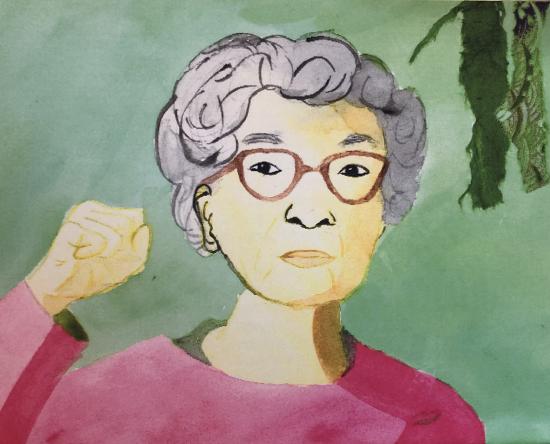
The reading mentions Yuri Kochiyama, a Japanese American activist who supported Black liberation and was close friends with Malcolm X. This example shows that solidarity can cross racial lines. It also shows that people can fight for justice beyond only their own community.

I also learned about the fight to save the International Hotel in San Francisco. Asian American activists tried to stop the eviction of elderly Filipinx and Chinese residents. This struggle was about housing justice and protecting vulnerable people. It shows that activism is not only about big speeches or famous marches. It is also about helping real people stay in their homes and protect their dignity.

The reading also points out that Asian American women and LGBTQ Asian Americans faced sexism and exclusion within the movement. This is important because liberation movements are not perfect. They can still repeat harmful patterns inside. Women were often pushed into background work. LGBTQ activists felt marginalized too. This reminds me that movements must also examine their own problems if they want true justice.

Next, the reading talks about the Young Lords. This was a Puerto Rican movement that began in Chicago in 1968. The group fought for Puerto Rican independence and for the needs of poor and working-class communities. They created community programs like free breakfast, clothing drives, childcare, health services, and Puerto Rican history classes. They also organized around healthcare, prison conditions, police violence, and the war in Vietnam.

I think the Young Lords are important because they focused on everyday needs. They showed that liberation means more than just political slogans. It also means food, housing, healthcare, and education. They connected community survival with political struggle.

Puerto Rican women in the Young Lords also challenged sexism in the party. They spoke against machismo and demanded equality. The group later revised its program to support gender equality and oppose homophobia. This stood out to me because it shows growth. It shows that movements can change and improve when women and marginalized members speak up.

The reading then explains the Brown Berets. This group formed among Chicana/o/x activists in the 1960s. They were inspired by the Black Panther Party and fought against police brutality, the Vietnam War, and social inequality. They also created free medical and food programs. The Brown Berets believed in coalition building and solidarity with other communities of color. I think this is another example of how different groups learned from each other and supported each other.

The American Indian Movement, or AIM, is another major movement in this reading. AIM was formed in 1968 in Minneapolis. It focused on treaty rights, tribal sovereignty, cultural survival, police brutality, and economic justice. Unlike some civil rights groups, AIM was less focused on integration and more focused on protecting Native identity and land rights.

This part of the reading helped me understand that Native struggles have a unique history. Native communities were dealing with forced relocation, poverty, and the loss of children to foster care and adoption. These issues came from settler colonialism and government control. AIM fought for Native rights and self-determination.

Women played important roles in AIM too. Native women helped organize protests, lead negotiations, and speak out as Native feminists. This reminds me again that women were central in many liberation movements, even if history books do not always highlight them.

AIM also helped achieve important legal reforms. One example is the American Indian Religious Freedom Act of 1978, which lifted the ban on Native spiritual ceremonies. This is important because it shows that activism can protect both political rights and cultural traditions.

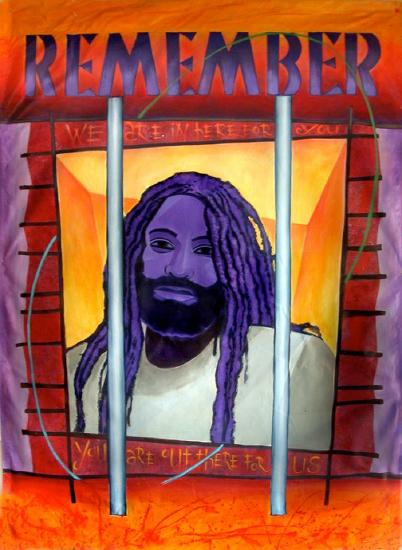
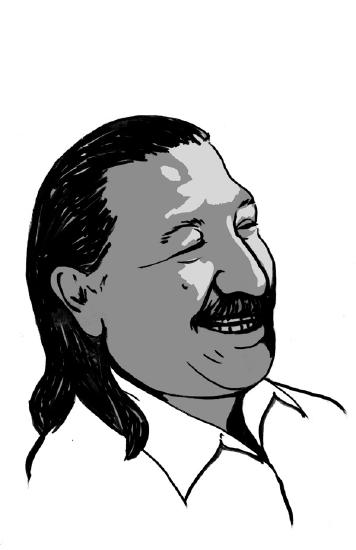
The reading also includes a sidebar about political prisoners like Mumia Abu-Jamal and Leonard Peltier. These cases show how the government targeted activists. The state used surveillance, prison, and fear to weaken movements. This created a chilling effect, meaning people became afraid to speak out. I think this is important because it reminds us that activism often comes with heavy risks.

Overall, this reading shows that U.S. liberatory movements were diverse, brave, and deeply connected to community survival. Black, Asian American, Puerto Rican, Chicana/o/x, and Native activists all fought in different ways, but they shared a desire for justice and freedom. They challenged racism, poverty, imperialism, and state violence. They also created programs to care for their communities.

My main reflection is that these movements were not only about protest. They were also about love, care, and responsibility. They fed children, protected residents, taught history, and defended human dignity. That makes these movements powerful to me. They were building a better world, not only criticizing the old one.

This reading also helped me see that solidarity matters. Many groups learned from each other and supported each other. Their struggles were connected. That lesson is still important today. Social change becomes stronger when communities work together.

In conclusion, this chapter helped me understand that civil rights and liberatory movements were shaped by courage, sacrifice, and community action. These movements fought against injustice in many forms and created important change. They remind us that oppressed communities have always resisted. Their history is a history of strength, leadership, and hope.

The Civil Rights Movement

The Montgomery bus boycott of 1955 is widely recognized as the start of the modern Civil Rights Movement in the United States, with the arrest of Rosa Parks who refused to give her seat to a white passenger. Still, it should be noted that earlier court cases, direct actions, and civil disobedience all led to the development of this movement, and Parks was not the first to refuse giving up her seat on the bus. However, Parks’ actions did lead to the Montgomery bus boycott becoming one of the most impactful boycotts in the U.S., ushering in a mass movement to dismantle the Jim Crow South and legal segregation of schools, businesses, and public transportation. The Civil Rights Movement also instituted voting rights for African Americans and other disenfranchised communities. This era culminated into significant legislative victories including: the U.S. Supreme Court decision of Brown v. Board of Education (1954), the Civil Rights Act of 1964, the Voting Rights Act of 1965, and the Fair Housing Act of 1968.

The Reverend Martin Luther King, Jr. emerged as a leader for this movement, although there were many others who haven’t been as widely recognized for their contributions including women and gay men. Bayard Rustin, Fannie Lou Hamer, Ella Baker, and Septima Clark, to name a select few, played instrumental roles in what is considered one of the most effective mass movements in U.S. history.

One year since the start of the boycott, buses were desegregated following a Supreme Court ruling and Dr. King quickly became a national political figure. He established the Southern Christian Leadership Conference (SCLC) and led multiple nonviolent protests against “the moral injustices of a segregated society” (Paulson, 2020, p. 144). Dr. King led more than 200,000 supporters of the movement in the 1963 March on Washington, D.C., and led another major protest of the movement in 1965, marching from Selma to Montgomery, Alabama to pressure Congress to pass the voting rights bill. In most instances, peaceful demonstrators were met with violence, harassment, arrests and even death by white mobs and police.

People singing near the Washington Monument
Figure Civil Rights March on Washington, D.C. (Children near the Washington Monument), August 28, 1963. (Licensed under Public DomainU.S. National Archives and Records Administration)

An earlier landmark decision was the 1954 Supreme Court decision in Brown v. Board of Education, which overturned the 1896 Plessy v. Ferguson ruling on “separate but equal” in public education, making racial segregation in schools illegal (pp. 142-143). The decision was met with severe resistance from whites, with some school districts preferring to close their schools instead of integrating with African American students. When a violent white mob attempted to stop the integration of Black students in Central High School in Little Rock, Arkansas, President Eisenhower sent federal troops to protect the “Little Rock Nine” (p. 143). See also "Challenges to Legal Segregation" under Chapter 2.

It is important to note that the 1954 Brown v. Board of Education case was not the first to address segregation and discrimination in schools. In 1884, Chinese Americans Mary and Joseph Tape were not allowed to enroll their daughter in the San Francisco public school district because she was Chinese. The Tapes sued the school board and the landmark California Supreme Court Case, Tape v. Hurley (1884) ruled that all children, including children of non-white immigrants, were entitled to public education in the state. However, the state assembly passed a law that established racially segregated schools under a separate but equal doctrine and the Tapes' daughter, enrolled in a separate school in Chinatown that was created for Chinese and other Asian American children.

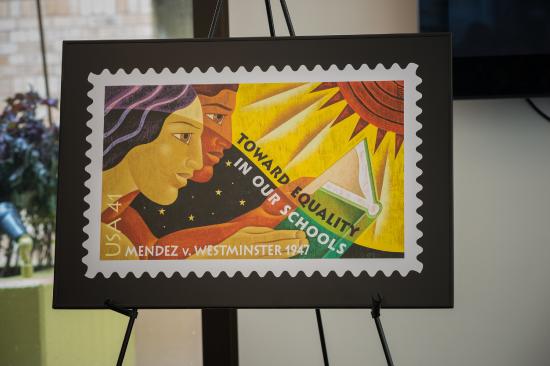
The 1946 Mendez v. Westminster case was another landmark decision challenging school segregation, and this was a crucial precursor to Brown v. Board of Education. Gonzalo Mendez (Mexican American) and Felicitas Mendez (Puerto Rican) tried to their enroll their three children in a public elementary school in Orange County but were denied because the school didn't allow Mexican Americans to attend. They and 5,000 other similarly aggrieved parents filed suit against multiple Orange County schools districts and ultimately the Supreme Court declared that segregation on the basis of a Spanish surname was unconstitutional. See also "Sidebar: Mendez vs. Westminster and Discrimination in California's Public Schools" under Chapter 2.

A poster of the first issue stamp commemorating the Mendez v. Westminster School District case
Figure A 2007 stamp commemorated the Mendez v. Westminster case that ended school segregation in California. (CC BY 2.0USDA photo by Bob Nichols).

“Sit-ins” were another useful tactic for the Civil Rights movement, started by four Black college students protesting the discrimination of Black patrons at the local Woolworth’s lunch counter in Greensboro, North Carolina. These students and supporters formed the Student Nonviolent Coordinating Committee (SNCC) in 1960, and they played an important role in voter registration drives.

The Voting Rights Act of 1965 prohibited literacy tests and an amendment in 1970 and 1975 banned literacy tests in all fifty states permanently (p.142). Literacy tests, poll taxes, white primaries and other policies were adopted in the Jim Crow South at the end of Reconstruction as a way to eliminate the African American right to vote (p. 141).

The Civil Rights Act of 1964 made it illegal to discriminate on grounds of “race, color, religion or national origin,” adding the banning of discrimination in employment practices, and it was followed up by the Civil Rights Act of 1968, also known as the Fair Housing Act, which prohibited discrimination in housing.

Black Panthers

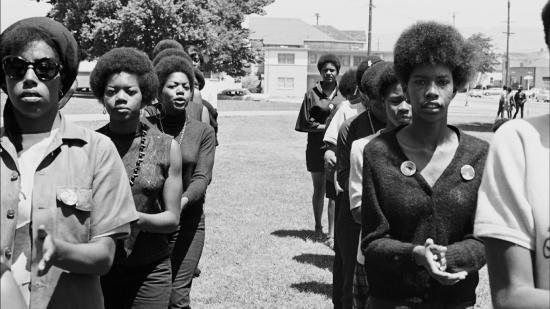
The Black Panther Party for Self-Defense, often called the Black Panther Party (BPP) was a political organization founded in 1966 in Oakland, California by Huey P. Newton and Bobby Seale. The BPP was rooted in the ideology of Black nationalism, socialism, and armed self-defense, and the organization based its practices on the logic of separatism, rather than the integration approach taken by other civil rights organizations. This debate is a profound and existential one for many activists and movements, who must decide when to operate within the systems that exist and when to challenge the system as a whole and work for transformation. Stokley Carmichael was a BPP leader who led the party to form educational and social programs, in addition to political activity. Women also played an important role in the BPP, and can be seen in formation in Figure .

A group of Black Panther women protesting
Figure Black Panthers Women. (CC BY-SA 4.0; Rainalee111 via Wikimedia Commons)

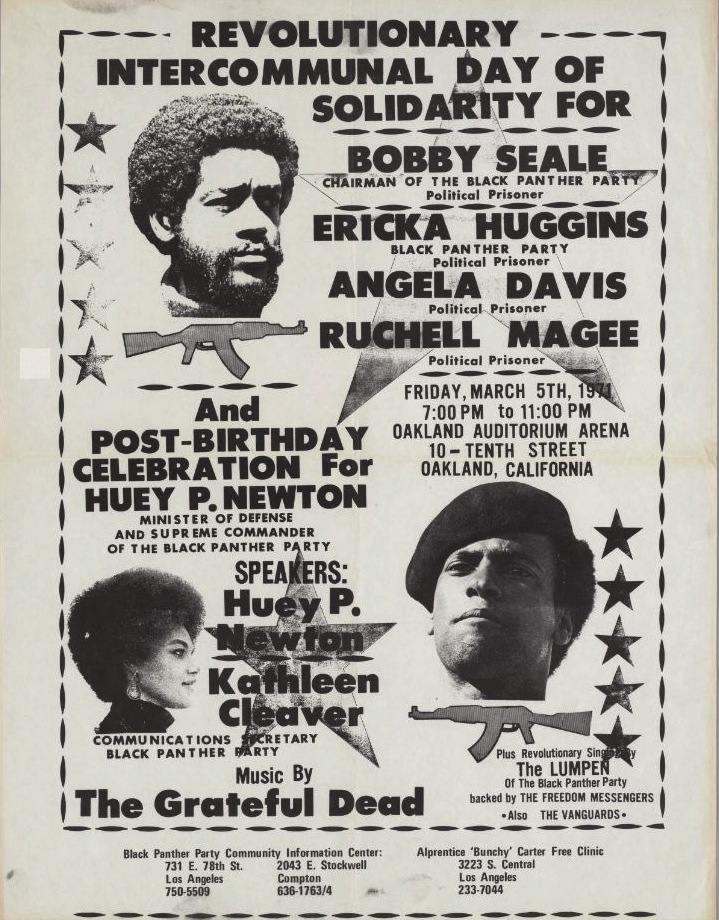
Leaders like Bobby Seale sponsored initiatives like the Free Breakfast Program, which provided meals to low-income children, helping them to be better prepared and engaged throughout their school day. This was an effective strategy because it directly helped people in need, it demonstrated the capacity and funding for a group of people to provide and distribute food for free, and it raised awareness about one way that economic condition (the ability to provide breakfast) was influencing academic outcomes (participation and engagement in school). Because of their high-profile successes, the BPP quickly became a target for the FBI, headed at the time by J. Edgar Hoover, who created the COINTELPRO program to infiltrate, surveil, and divide members to bring down and dismantle domestic organizations that challenged the status quo, including the Black Panther Party. An image showing the targeting of Black Panther Party leaders is included in Figure .

Details in caption.
Figure Black Panther Party poster - Featuring Black Panther Party leaders, which reads, “Revolutionary Intercommunal Day of Solidarity for Bobby Seale, Chairman of the Black Panther Party, Political Prisoner, Ericka Huggins, Black Panther Party, Political Prisoner, Angela Davis, Political Prisoner, Ruchell Magee, Political, Prisoner, and a Post-Birthday Celebration for Huey P. Newton, Minister of Defense and Supreme Commander of the Black Panther Party, Speakers: Huey P. Newton, Kathleen Cleaver, Communications Secretary, Black Panther Party, Music by the Grateful Dead, Friday March 5th, 1971, 7:00 PM to 11:00 PM, Oakland Auditorium Arena, 10-Tenth Street, Oakland, California.” (CC BY 2.0CIR Online via Flickr)

Asian American Movement, 1960s - 1970s
In the wake of the Civil Rights Movement and Black Power, Asian Americans were inspired to forge their own way based on a pan-ethnic identity. Rejecting the label, “Oriental,” young Asian Americans of the 1960s adopted the term “Asian American” to describe their identity and movement. Resisting both the “model minority” and “yellow peril” stereotypes, they organized for economic and racial justice in education, labor, and housing, along with fighting in solidarity with Black, Brown, and Native communities who faced related oppressions rooted in white supremacy, capitalism, and imperialism.

Asian American Studies historian, Daryl Maeda, pointed out how the Asian American movement “drew heavily from the African-American movement” in order to inform Asian American subjectivity and racial commonality, such as embracing the militant style of dress, adoption of the “Black Power” slogan to “Yellow Power,” and deeper connections between the Asian American and African American movements. For instance, the work of Japanese American activist Yuri Kochiyama’s dedication to Back liberation struggles and close friendship with Malcolm X (Fujino, 2005) (Dhingra and Rodriguez, 2021, p. 73).

Kochiyama has grey hair, wearing glasses, and lifting up a fist
Figure : Illustration of Japanese American activist, Yuri Kochiyama (watercolor and collage). (CC BY-NC-SA 4.0; By Kay Fischer)

Asian American activists and organizations participated in “serve-the-people” programs fighting for affordable housing, access to healthcare and social services, labor rights, women’s rights, and LGBTQ rights. For example, one of the major campaigns for housing was the decades-long effort to save the International Hotel (I-Hotel) in San Francisco, which primarily housed elderly Filipinx and Chinese men who lived in the single room occupancy building. When in 1969, the owners of the I-Hotel attempted to evict residents who had nowhere else to go, the Asian American movement rallied to protect the residents, even forming barricades and facing 250 riot police (Lee, 2015, p. 307 - 308).

Similar to what many other women of color activists faced in that era, Asian American women called out the sexism and secondary status they faced, being relegated to background work like taking notes, making coffee, and even cleaning toilets. Lesbian, Gay, Bisexual, and Transgender (LGBT) Asian Americans felt marginalized both within the mainstream white gay liberation movement and within the Asian American movement. Activist and journalist, Helen Zia remembered being put on trial by other Asian American and Black liberation activists in Boston, stating, “I had not yet come out, and they made it clear that if I did, I would also be out of the liberation community. That threatening message kept me in the closet for the next several years” (pp. 309 - 310).

The Asian American movement was uniquely transnational as well, as members organized against U.S. wars, militarism, and imperialism in Asia. For example, they protested against the Vietnam War, critiqued US military occupation in Okinawa and Korea, and aligned with other anti-colonial, anti-imperial, socialist, and communist struggles in Asia. As noted by Maeda, the Asian American movement “sought to achieve radical social change by building interracial coalitions and transnational solidarities” with the goal of dismantling interlocking systems of oppression (p. 304, p. 308).

The Asian American movement was formed across college campuses, including the Asian American Political Alliance (AAPA) started by Yuji Ichioka and Emma Gee in 1968 at UC Berkeley. They were the first organization to use the term “Asian American.” AAPA was intentionally pan-ethnic, bringing together Asian Americans across generations, class, and ethnicity. AAPA also “explicitly critiqued the United States as a racist, imperialistic, and exploitative society,” pointing out how Asian Americans have been systematically affected by racial injustice. AAPA also committed to interracial solidarity with other “Third World people,” both abroad and within the United States. AAPA played a major role at both SF state (1968) and UC Berkeley’s (1969) Third World Liberation Front (TWLF) strike to bring about Ethnic Studies at colleges and universities across the nation (pp. 304 - 305).

Young Lords (1968 - 1972)

Young Lords poster with illustration of 4 purple riffles with words: struggle, health, food, housing, education printed across

Figure Young Lords Party: Health, Food, Housing, Education. (Public DomainSmithsonian Institution)

The Young Lords started in 1968 with Puerto Rican youth in Chicago, many of whom were former gang members. The socialist organization advocated for grassroots services controlled by and for the people. They also organized for Puerto Rican independence (a U.S. territory since the 1898 Spanish-American War), including leading a march of 10,000 in 1970 in New York City. The Young Lords Organization (YLO) chapter in New York City, founded by Puerto Rican college students, became the Young Lords Party. Chapters were formed mostly o the east coast and also briefly in Hayward, California (Ruíz and Sánchez, Korrol, 2006, pp. 815 - 816). The Young Lords were inspired by global liberation struggles and the Black Panther Party (BPP). The original Chicago group gained a national spotlight when taking over a local church to provide community services for the poor. Similar to the Black Panthers, the Young Lords dressed in military style with army jackets, combat boots, and purple berets with a YLO button (Hulst, 2013, pp. 636-639).

The Young Lords’ community organizing centered on the social needs of working class and poor Puerto Rican communities, including garbage collecting, free hot breakfast for children, clothing drives, child-care services, Puerto Rican history classes, health programs, and entertainment through poetry readings, music, etc. Their health offensive focused on taking over the Lincoln Hospital in the South Bronx and organizing a lead poison and tuberculosis testing site. Another offensive focused on prison conditions for incarcerated Puerto Rican and African Americans, who were reporting high suicide rates, in addition to addressing police violence, drug addiction, and the war in Vietnam (Ruíz and Sánchez Korrol, 2006, p. 816).

Puerto Rican women were active in the Young Lords from the beginning, confronting “male chauvinism” within the party. In 1971, Denise Oliver, the first woman on the Central Committee, called for women’s participation, stating,

when the Party got started, there were very few sisters….We saw that we really weren’t gonna be able to do any kind of constructive organizing in the community without sisters actively involved…because most of the people that we’re organizing are women with children, through the free-breakfast program and through the free-clothing drive and health care programs (Ruíz and Sánchez Korrol, 2006, p. 816).

Women in the party called out how they were often relegated to domestic and office work, such as typing, taking care of children, and being sexualized by male members. Female Young Lords formed a women’s caucus, recognizing the need to discuss and dismantle machismo culture in the community. The party recognized the intersection of women’s oppression, capitalism, and imperialism, and eventually revised their Thirteen Point Program to assert gender equality and an end to homophobia (Ruíz and Sánchez Korrol, 2006, p. 816). The program also addressed the group’s desire for self-determination, anti-racism, community control over institutions like hospitals, schools, and law enforcement, for Puerto Rican history and Spanish language to be taught, and they demanded a socialist and nonviolent state (Hulst, 2013, pp. 636-639).

The Young Lords didn’t last a very long time, but they still made an impact by asserting Puerto Rican independence and rights for Puerto Ricans in the U.S. They experienced some divisions within the organization as well as infiltration by the FBI’s COINTELPRO, similar to what happened to the BPP. In 1972, the remaining Young Lords became the Puerto Rican Revolutionary Workers Organization (Hulst, 2013 & Ruíz and Sánchez Korrol, 2006). Former members continued the fight for Puerto Rican freedom, by occupying the Statue of Liberty in 1977, demanding the release of Puerto Rican political prisoners and protesting against U.S. military exercises on the island of Vieques (Hulst, 2013, pp. 636-639).

Brown Berets

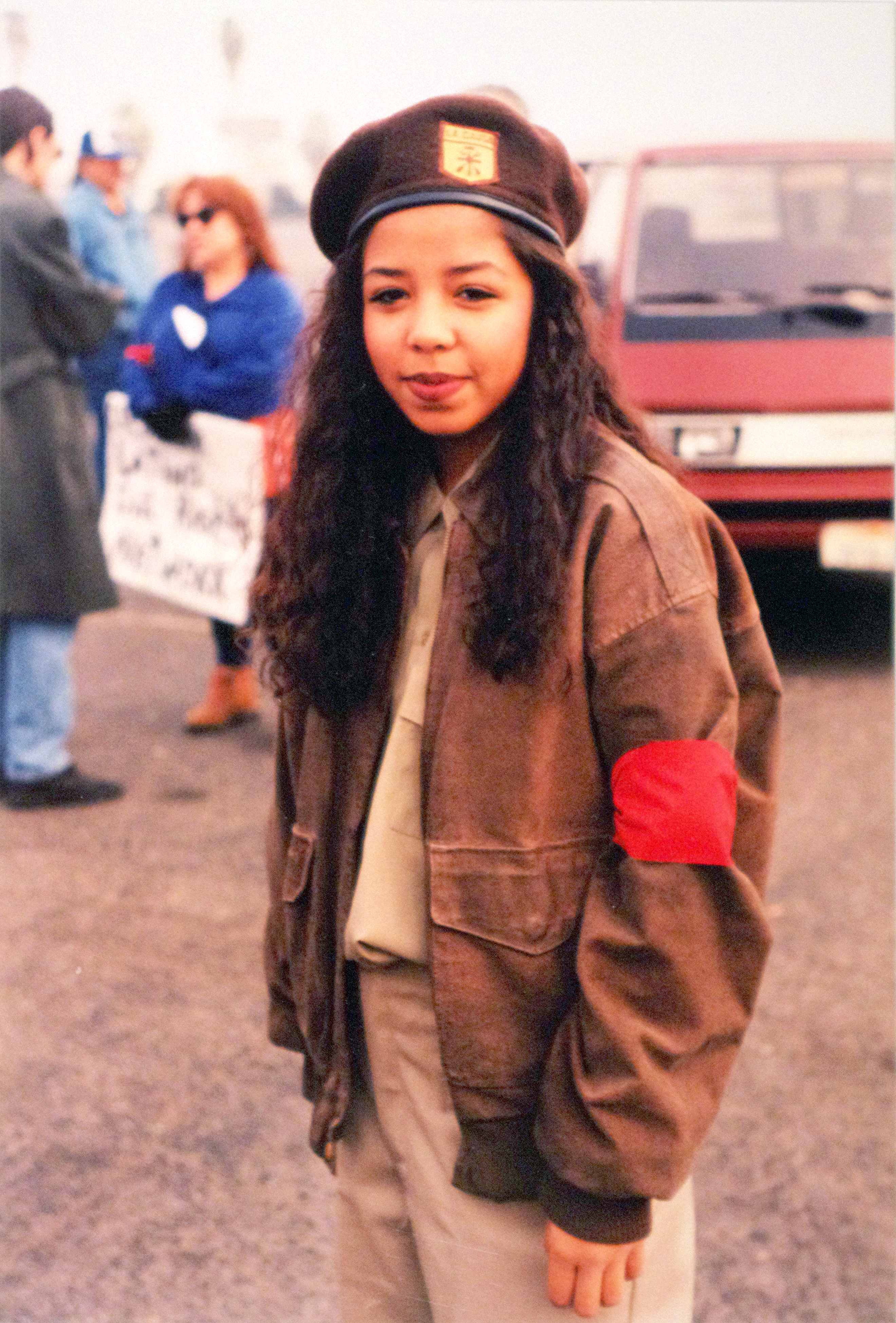
In the 1960s, heightened awareness of racial injustice inspired many groups to stand up and take action. The Brown Berets were one such group that formed among Chicana/o/x activists. It began with a group of high school students who were part of a civic participation program inspired by the Black Panther Party to take a stance of radical nationalism. Chapters formed in California and around the country, and many are still active today. The group shared ideological positions with the Black Panther Party, including resistance to police brutality, opposition to the Vietnam War, and a militant commitment to revolutionary social change. This position also made them a regular target for government interference and sabotage. They implemented free medical and food programs to help community members affected by disparities in access. The Brown Berets have always taken on a coalitional standpoint and embraced a commitment to Third World alliances with other communities of color in the U.S. and around the world. The image shown in Figure  features a young activist in 1994 as part of the Brown Berets preparing to participate in a protest for immigration equity and against Proposition 187.

A girl wearing a brown beret uniform in preparation for a protest
Figure 1994 No On 187 March Kings Canyon Rd Fresno. (CC BY 2.0David Prasad via Flickr)

American Indian Movement

During the 1960s, Native American communities were dealing with many of the same issues as communities of color in the United States. The US government embraced an urban relocation model that forced Native Americans off of reservations and traditional lands into low-income jobs and neighborhoods in cities and urban areas. Although the government promised jobs, housing, and healthcare, these were few and far between. The mixture of many tribal groups in large cities led to the embracing of a pan-Indian identity united by shared experiences of settler-colonialism, genocide, and displacement. This included dealing with tensions between urban Native communities and those living on reservations, the highest unemployment rates of any racial or ethnic group, and disparate rates of child abductions and children being taken into foster care and adopted by non-Native families. The pan-Indian community acted as a support system and buffer against racism and poverty and fostered resilience. Today, there is a backlash against the pan-Indian identity because it erases cultural specificity and traditional tribal knowledge.

The American Indian Movement (AIM) was first formed in Minneapolis in 1968 before expanding to other chapters around the country. Some of the key figures in AIM include Russel Means, Dennis Banks, Clyde Bellecourt, John Trudell, Leonard Peltier, and Mary Jane Wilson. Roberta Downwind suggested the name “AIM,” which lends itself to graphic interpretation in the form of arrows and targets, signaling the legacy and importance of resistance. One major difference between AIM and other civil rights movements was that their focus was less on integration with dominant society and more on maintaining cultural integrity, the enforcement of treaty rights, and empowering tribal sovereignty. Key issues for AIM included: economic independence and opportunity, police brutality and abuse, and culturally relevant healthcare. Women leaders played a key role in speaking up to both anti-Native issues but also the unique experiences and perspectives of Native feminists. AIM was involved in many demonstrations, including the occupation of Alcatraz Island in the San Francisco Bay from 1969-1971, as well as the Longest Walk from Alcatraz to Washington, DC.

One major success of AIM was lifting the ban on Native American spiritual ceremonies that was established by U.S. law in 1884 through the American Indian Religious Freedom Act in 1978. This built on a decade of legal reform, including the 1965 Indian Self-Determination and Education Act, 1968 Indian Civil Rights Act, 1972 Indian Education Act, 1975 Indian Education Assistance and Self-Determination Act, and 1978 Indian Child Welfare Act. Like the Black Panthers and Brown Berets, AIM was targeted by the FBI for infiltration and disruption, and the national organization disbanded in 1978, although it was outlived by local chapters of AIM that continue to mobilize and inspire Native American and Indigenous activists today.

AIM was not the only organization to mobilize Native peoples from multiple tribes. For example, the National Congress of American Indians was founded in 1944 to face off against the federal government and improve the conditions of Native Americans. The group was somewhat more moderate in advocating for reforms. The National Indian Youth Council was formed in 1961 to advocate for sovereignty and human rights. Youth were dissatisfied with the advocacy and leadership of elders. Similarly, Women of All Red Nations (WARN) formed out of AIM and focused on the leadership and experiences of Native women.

Women advocates were key to many aspects of Native American and American Indian movements. For example, the occupation of Wounded Knee was a protest designed, organized, and implemented by older women. After spearheading dissent at Pine Ridge, the Oglala Lakota Sioux women took on more responsibilities, including carrying weapons. Leaders like Bisonette and Moves Camp were key elders who carried out negotiations on behalf of the movement. See also "Alcatraz, AIM and Wounded Knee" under Chapter 4.

Sidebar: Political Prisoners

As part of the strategy of intimidation and subversion, the U.S. federal government has taken activists as political prisoners. Mumia Abu-Jamal was 14 years old when we has beaten by white racists and a police officer. He found the Black Panther Party (BPP) and embraced its approach to change, moving to Oakland to live with BPP members and organize for the movement. However, he also came under surveillance by the FBI, which made him a target. He was charged and convicted with killing a police officer and has been held in prison ever since, currently serving a life sentence without parole. Similarly, Leonad Peltier was arrested shortly after his involvement in the Wounded Knee occupation and general community leadership. He was charged for the death of two police officers, although there is much evidence that was missing from the trial. Peltier maintains his innocence and substantial evidence was not reviewed in the first trial and appeal for the case. However, the targeting of activists for their outspoken advocacy can lead to a “chilling effect” where activists are less likely to take risks out of fear of imprisonment or other consequences. You can view artistic renditions of both individuals in Figure  and Figure .

An artistic image of Mumia Abu-Jamal behind bars
Figure Mumia. (Free Cultural Works; Mike Alewitz via Wikimedia Commons)
A drawing of Leonard Peltier
Figure Leonard Peltier. (CC BY-NC-ND 3.0Bec Young via JustSeeds)

No comments:

Post a Comment