Reflection Summary: What Intersectionality Means and Why It Matters
This week’s reading, “8.2: What is Intersectionality?” helped me understand intersectionality in a clearer and deeper way. Before, I thought intersectionality was mostly about identity labels. I thought it meant a person has many identities at the same time. This reading shows that it is more than that. Intersectionality is also a framework for seeing how power works. It helps us understand how social systems can overlap and create harm. It also helps us see how people resist harm and build liberation (Fischer).
The reading begins with Audre Lorde. She describes herself as “black, lesbian, mother, warrior, poet.” That self-description is important because it refuses to be simplified into one category. Lorde explains that Western society often uses simple binary thinking. It uses frames like good/bad, superior/inferior, and dominant/subordinate (Fischer). These frames are not neutral. They create hierarchies. They teach people to rank each other. Lorde says that because of her identities, she was often treated as “other.” The reading explains that Lorde connects this “othering” to an idea called the mythical norm (Fischer). The mythical norm is the idea that the “normal” person is white, thin, male, young, heterosexual, Christian, and financially secure (Fischer). People who do not fit this “norm” are treated as less important. They are treated as deviant. They are treated as wrong. This part made me think about how “normal” is not natural. “Normal” is created by power. It is created by culture, media, and institutions. It becomes a standard that people are measured against.
Lorde also describes a painful pressure. She says people encourage her to remove one part of herself and present that part as if it is the whole self (Fischer). This means society wants simple stories. It wants people to pick one identity and hide the rest. Lorde says this is destructive and fragmenting. I understood this as a strong message about wholeness. Intersectionality is not only political. It is also personal. It is about living as a whole person. It is about refusing to cut yourself into pieces to make others comfortable. When people are forced to hide parts of themselves, they lose freedom. They also lose safety. They lose belonging. This is why Lorde argues that recognizing difference should not divide people. Instead, difference can strengthen collective struggles. She says women must recognize differences among women as equals, not as superior or inferior, and use difference to enrich visions and joint struggles (Fischer). I think this statement is powerful because it challenges competition and comparison. It challenges the idea that one group must be centered while another group is erased. It asks people to build solidarity based on respect, not sameness.
After Lorde, the reading asks a key question. If old frames exclude people, what new frames can we use? The reading gives examples such as UndocuQueer people, trans refugees, and women of color (Fischer). This made me connect to the Week 6 lecture about framing. A frame decides what we see and what we do not see. Without the right frame, people disappear. Without the right frame, harm is ignored. The reading gives a clear example: police violence. If we do not use an intersectionality lens, we will miss how Black women are also impacted, not only Black men (Fischer). This is important because many public conversations focus on men. Women’s stories can be forgotten. Their names can be unknown. Intersectionality helps us correct that. It helps us see who is missing. It helps us ask why they are missing.
The reading then explains the “framing of intersectionality” through Kimberlé Crenshaw. It says the term intersectionality is widely recognized as being coined by Crenshaw in 1989 (Fischer). It also describes her 2016 TED talk where she asks people to name those killed by police. Many people recognize men’s names. But many people do not recognize the names of Black women who were killed by police (Fischer). Crenshaw says Black women have “slipped through our consciousness” because there were no frames to see them (Fischer). That line stayed in my mind. It shows how invisibility is created. It is not only about lack of care. It is also about lack of language and lack of public attention. If society does not have a frame to notice someone, their suffering can be normalized. Their deaths can be ignored. Intersectionality is a corrective frame. It is a tool to widen our awareness.
The reading also describes the case of Emma DeGraffenreid. She was a Black woman who sued a car manufacturing plant for discrimination. Her case was dismissed. The judge said the employer hired African Americans and hired women. But the deeper truth was hidden. The plant hired Black men for industrial jobs and hired white women for office jobs (Fischer). Black women were excluded from both tracks. The court refused to recognize “double discrimination.” This part shows why intersectionality matters in law and policy. If a system only recognizes race discrimination or gender discrimination separately, it can fail people who face both at once. Crenshaw uses the intersection analogy. One road represents race. One road represents gender. A Black woman stands where the roads overlap (Fischer). That overlap can create a unique form of harm. It is not simply racism plus sexism as two separate items. It is a specific experience shaped by both at the same time. Intersectionality helps us see that. It helps institutions understand it. It can help produce better justice.
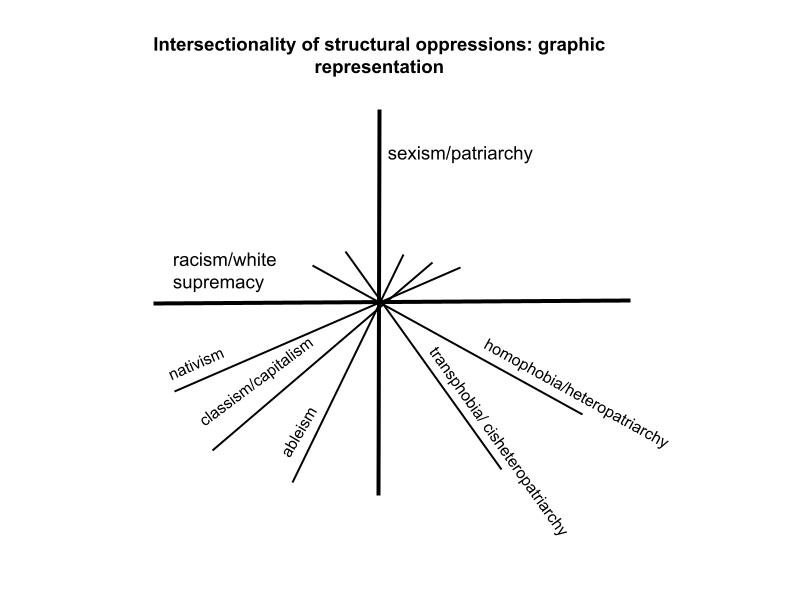
The reading then expands the idea. It says intersectionality also includes other systems such as nativism, classism, ableism, transphobia, and homophobia (Fischer). This part helped me see intersectionality as a map. It maps structures of oppression. It also maps identities. But the reading keeps returning to systems, not only identities. The central point is that oppressive systems interlock and shape life outcomes. They shape risks and safety. They shape who is protected and who is punished.
The reading connects this to #BlackLivesMatter through Alicia Garza. Garza explains that the movement affirms Black queer and trans people, disabled people, undocumented people, people with records, women, and all Black lives across the gender spectrum (Fischer). This is important because it shows intersectionality in practice. It shows how movements can choose to center those most marginalized. It also shows how movements can resist the habit of making one group the “face” of the struggle while others are pushed aside. The reading suggests that intersectionality strengthens movements. It makes them more honest. It makes them more complete.
Another important part of the reading is the history of women of color and trans women of color in liberation movements. The reading explains that even before Crenshaw coined the term, women of color already developed intersectional thinking through their activism and lived experience (Fischer). They faced colonialism, racism, sexism, militarism, and capitalist exploitation at the same time (Fischer). Because of this, they understood that single-issue frameworks were not enough. The reading explains that many movements in the 1960s to 1980s were male-centered and also shaped by sexism and heterosexism. Women and LGBTQ members were often marginalized in those movements (Fischer). At the same time, white-led feminist and gay liberation spaces often ignored racism and ignored the voices of women of color and LGBTQ people of color (Fischer). This part shows that oppression can happen even inside movements for liberation. It also shows why women of color created their own groups and language.
The sidebar about Marsha P. Johnson and Sylvia Rivera made the reading feel human and real. The reading explains that they were trans activists of color. They fought for queer and trans rights. They supported homeless LGBTQ youth of color through STAR (Fischer). They also experienced violence and exclusion, even within mainstream gay communities. The reading describes how they were told to march in the back at Pride so the movement could appear “more palatable” (Fischer). They refused. Sylvia Rivera also called out discrimination in her speech. This part made me think about respectability politics. It shows how movements can be tempted to hide those who are most stigmatized. Intersectionality challenges that. It demands inclusion of people who are often erased.
The reading ends by highlighting the Combahee River Collective (CRC) and “A Black Feminist Statement” (1977). The CRC wrote that they were committed to struggle against racial, sexual, heterosexual, and class oppression (Fischer). They named these as interlocking systems of oppression. They also said it was difficult to separate race, class, and sex oppression because they are experienced simultaneously (Fischer). They argued that liberation requires the destruction of capitalism, imperialism, and patriarchy (Fischer). I think this is a strong example of intersectionality as both analysis and political strategy. It is not only describing the world. It is also describing how to change it.
Overall, this reading helped me understand intersectionality as a new frame. It helps us see people fully. It helps us see systems clearly. It helps us see who is missing from public attention and why. It also helps us build solidarity without forcing people to erase parts of themselves. Intersectionality matters because oppression is not simple. Liberation cannot be simple either. If we want justice, we need frames that match real life. This reading taught me that intersectionality is one of those frames (Fischer).
Works Cited
Fischer, Kay. “8.2: What is Intersectionality?” Introduction to Ethnic Studies (Fischer et al.), ASCCC Open Educational Resources Initiative (OERI), Social Sci LibreTexts, CC BY-NC 4.0, n.d. Accessed 18 Feb. 2026.
Crenshaw, Kimberlé. “The Urgency of Intersectionality.” TEDWomen, TED, 2016.
Lorde, Audre. “Age, Race, Class, and Sex: Redefining Difference.” 1980.
Garza, Alicia. “A Herstory of the #BlackLivesMatter Movement.” The Feminist Wire, 2014.
If your instructor wants the Works Cited to include the exact LibreTexts URL and the exact textbook title shown on Canvas, paste that line and I will format it perfectly in MLA.
8.2: What is Intersectionality?



Embracing Our Whole Selves
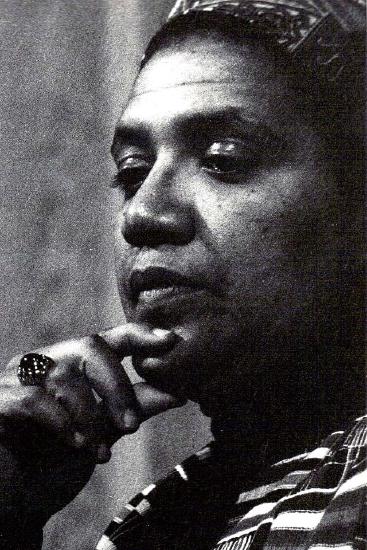
Writer, Audre Lorde (Figure
If we are to dispense old frames that exclude our experiences, what are new frames we can apply that will center the experiences of UndocuQueer people, Trans refugees, and women of color, or cis and trans women who are not racialized as white, including Black, Arab, Asian, Chicana/x, Indigenous, Latina/x, Pacific Islander, and mixed race women, for example? A chapter on intersectionality in this Introduction to Ethnic Studies textbook is paramount to addressing questions around liberation and interlocking systems of power as they pertain to race and ethnicity, yes, but also class, gender, and sexuality. If we don’t apply an intersectionality lens to understanding police violence, for example, we’ll miss the fact that Black women are just as impacted as Black men. Without an intersectionality lens, we wouldn’t be able to understand the ways in which Julio Salgado and other UndocuQueers experience the intersection of migration and sexuality. Without an intersectionality framing, we wouldn’t be able to recognize the way that Audre Lorde, as a Black lesbian feminist, would be marginalized in white middle class feminist spaces for being Black, and Black feminist spaces, for being a lesbian.
The Framing of Intersectionality
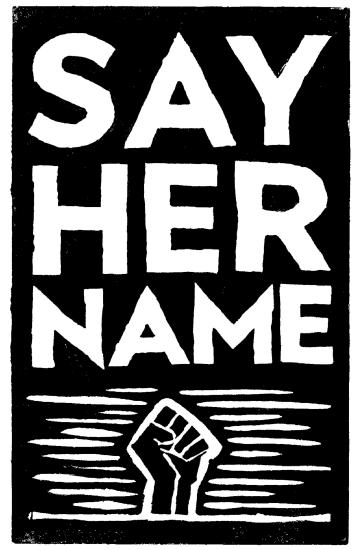
The term intersectionality is largely recognized as being coined in 1989 by professor of law, Dr. Kimberlé Crenshaw. In Dr. Crenshaw’s 2016 TED talk, “The urgency of intersectionality,” she conducted an exercise with her audience about people killed by the police. The majority recognized the names of Black men, including Eric Garner, Mike Brown, Tamir Rice and Freddie Gray. But when she began to read aloud the names of African American women who were killed by police, including Michelle Cusseaux, Tanisha Anderson, and Meagan Hockaday, most of the audience members didn’t know these names. All were African Americans killed by police, and only gender separated the second set of names. Crenshaw points out that Black women have “slipped through our consciousness because there were no frames for us to see them….But it doesn’t have to be this way” (Crenshaw, 2016).
Crenshaw introduces the frame that is lacking: intersectionality. She tells the story of Emma DeGraffenreid: an African American woman whose claim of race and gender discrimination against a local car manufacturing plant was dismissed. Seeking better employment for her family, she applied for a job and was not hired, and Ms. DeGraffenreid believed she wasn’t hired because she was a Black woman. The argument used by the judge for dismissing her suit was that the employer did hire African Americans and the employer did hire women. What wasn’t pointed out was that typically men were hired for industrial positions and only white women were hired for secretarial or front-office work. The courts were unable to recognize a type of double discrimination that Emma DeGraffenreid faced. Instead, they refused to allow Ms. DeGraffenreid to put two causes of action together, as the judge believed that she would have preferential treatment. Crenshaw asked,
Why wasn't the real unfairness law's refusal to protect African-American women simply because their experiences weren't exactly the same as white women and African-American men? Rather than broadening the frame to include African-American women, the court simply tossed their case completely out of court (Crenshaw, 2016).
Years later Crenshaw developed a frame to help us recognize Ms. DeGraffenreid’s challenge, one that would allow judges to see and understand her story. Crenshaw developed the term intersectionality - using an analogy of an intersection: one road representing a workforce structured by race, the other road by gender. Ms. DeGraffenreid, as a Black woman, was positioned where these roads overlapped, simultaneously experiencing gender and racial discrimination. African American women, and other women of color, and other socially marginalized people, face discrimination and challenges as a result of intersectionality: intersections of race and gender, homophobia, transphobia, immigration status, religious bias, and more, to create unique challenges. Intersectionality is a framing to help us raise our consciousness around the ways that oppressive social systems interlock and shape our lives. As Dr. Crenshaw connects back to the issue of Black women killed by police, she explains that intersectionality “expos[es] the tragic circumstances under which African American women die" (Crenshaw, 2016).
In Figure
.jpg?revision=1&size=bestfit&width=733&height=550)
On the point of police violence, one of the co-founders of #BlackLivesMatter, Alicia Garza, wrote in a contribution to The Feminist Wire titled “A Herstory of the #BlackLivesMatter Movement”:
Garza calls attention to the ways in which state-sanctioned violence is uniquely burdened by Black women, poor Black people, incarcerated Black people, Queer and Trans Black people, undocumented Black people, and Black people with disabilities. This is another important call for applying the intersectional framing, especially as #BlackLivesMatter has turned into one of the largest global movements for social change of our time.
Women and Trans Women of Color of 1960s - 80s Liberation Movements:
Although Crenshaw is credited with coming up with the term intersectionality, it’s important to recognize the long legacy of intellectual work produced by women of color who identified this concept decades earlier before the term was coined and popularly applied. According to Sociologists Patricia Hill Collins and Sirma Bilge who wrote a book on intersectionality, women of color who participated in social movements of the 1960s to '80s met “the challenges of colonialism, racism, sexism, militarism, and capitalist exploitation” (2016, p. 64) and because they were impacted by more than one of these systems of power, they applied foundational concepts of intersectionality in their work.
The movements of the '60s and '70s embraced a racial consciousness, rejecting generations of Eurocentric and colonial ideas of white supremacy and racial hierarchy. While rooted in nationalist framing, these culturally and racially based organizations also began to build coalitions and solidarity with other groups, addressing methods of dismantling the status quo and advocating for basic access to power for disenfranchised communities. While women of color were leaders and members of these movements, sexism, heterosexism, and male chauvinism prevailed and women and LGBTQ members faced abuse and marginalization. Divisions were also prevalent in the women’s movement and gay liberation movement of the time, especially when led by middle-class white women and cisgender gay white women and men, who reinforced racism or simply ignored the voices of women of color and LGBTQ peple of color. Frustrated by the limitations of male-centric nationalist organizations and white-led women’s and gay liberation organizations, Black feminists created their own groups, and published their own ideas around intersectionality and dismantling racism and sexism “using the epithet ‘black feminist’” (Collins and Bilge, 2016, p. 65).
Sidebar: Marsha P. Johnson (1945 - 1992) and Sylvia Rivera (1951 - 2002) - Trans Activists
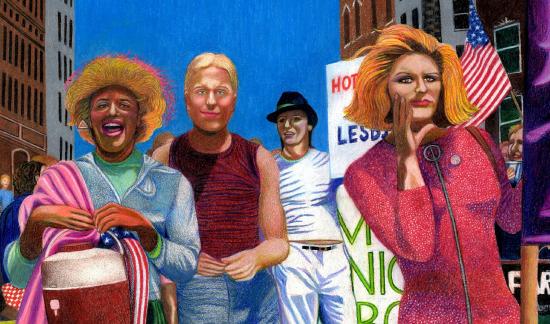
Marsha “Pay-it-no-mind” Johnson and Sylvia Rivera were best friends. Although largely uncredited for their activism in the mainstream until fairly recently, both were fearless leaders for gay and trans rights before terminology like “transgender” or LGBTQ existed. They advocated for Queer people, the homeless, poor people, and sex workers. Both participated in the Stonewall Uprising (1969) and Gay Liberation Front. Together, they founded STAR - Street Transvestite (later Transgender) Action Revolutions. STAR provided shelter for homeless LGBTQ youth of color, many of whom got into sex work in order to survive.
Marsha was from New Jersey and Sylvia was born in the Bronx, New York. As trans women of color (Marsha was Black, Sylvia was Puerto Rican and Venezuelan) they faced discrimination from white middle-class gay communities. Marsha was well known on Christopher Street in New York for her colorful and flamboyant outfits, typically including flowers and fruits on her head. She was unabashedly herself and famous for her generosity, standing up for the most vulnerable of our society and serving as a drag mother. Sylvia was often bullied for her interest in feminine makeup and fashion, leaving her home at only 10 years old. She expressed her gender identity in multiple ways including effeminate boy/male, “half-sister,” transvestite, drag queen, street queen, and transgender (Aue, 2019, pp. 74-76; Morris and Keller, 2021, pp. 742 - 744).
As sex workers who didn’t conform to gender binaries, and often homeless, both Marsha and Sylvia faced violence and harassment from clients, police, and bystanders and were arrested multiple times. They also struggled with mental illness and substance abuse. Marsha later became an AIDS activist, sharing that she was HIV positive in an interview in 1992. Marsha’s body was found floating in the Hudson River that same year. The police ruled it a suicide, but many of her friends suspected that Marsha was murdered (Aue, 2019, pp. 74-76; Pierceson, 2020, pp. 227-228). Sylvia died at the age 51 due to kidney cancer (Morris and Keller, 2021, pp. 742 - 744).
Both Marsha and Sylvia demanded the inclusion of trans people and gender identity in the mainstream gay liberation movement. At the 1973 Pride March, they were told to march in the back with all drag queens, so that gays who were “more palatable” could be presented prominently, but they refused to be shut out of a movement they fought for and marched ahead anyway. Sylvia was heckled while speaking on a stage at Washington Square Park, calling out white middle class marchers for their discrimination of trans people of color, who frequently were jailed and beaten, yet never acknowledged. In her now widely recognized speech, named Sylvia’s “Y’all Better Quiet Down” speech, she testifies to the violence she’s faced and yells, “I believe in gay power, I believe in us getting our rights, or else I would not be out there fighting for our rights” (LoveTapesCollective, 2019). She invites marchers to visit the STAR office, where people are “trying to do something for all of us, and not men and women that belong to a white middle-class club—and that's what you all belong to! REVOLUTION NOW! GAY POWER!” (Morris and Keller, 2021, pp. 742 - 744; Keller and Morris, 2021, pp. 466-467; LoveTapesCollective, 2019).
Collins and Bilge wrote:
African American women understood that addressing the oppression they faced could not be solved by race-only, or class-only or gender-only or sexuality-only frameworks. Thus early statements of intersectionality permeated black feminist intellectual production because other women of colour developed similar sensibilities and because the social context of social movement activism provided venues for working on these ideas (Collins 2000) (2016, pp. 65-66).
One such important piece of document that articulated this political and intellectual perspective was the Combahee River Collective (CRC)’s “A Black Feminist Statement” (1977). This collective of black feminists lesbians were deeply entrenched in racial justice and gender justice movements. Collins and Bilge point out that earlier texts had been written about the concept of intersectionality, such as the 1970 volume The Black Woman edited by Toni Cade Bambara, Frances Beal’s essay, “Double Jeopardy: To Be Black and Female” (1969), and abolitionist and feminist, Sojourner Truth’s “Ain’t I a Woman” speech (1840) which is noted as “a benchmark for intersectional sensibilities” (2016, p. 68). However, these contributions are often overlooked, as the writers didn’t have as large an audience as the CRC, nor the context of social movement organizing. By the time CRC developed, there was a larger network of black feminist activism which helped propel the CRC’s statement to a wider audience.
The statement starts out by affirming the collective’s commitment “to struggle against racial, sexual, heterosexual, and class oppression” which they named as interlocking systems of oppression (Smith, 2000, p. 264). They recognized the long trajectory of Black women resistance, and although not all would identify as feminists, the CRC pointed out how daily interactions with oppressive forces led Black women to develop a political ideology rooted in antiracism and antisexism (p. 265).
Embracing self-love and self-value, the CRC saw the importance of identity politics and that only Black women could liberate themselves. They rejected Queenhood and simply asked to be seen as full human beings. They explicitly named the framing of intersectionality, writing, “We also find it difficult to separate race from class from sex oppression because in our lives, they are most often experienced simultaneously” (Smith, 2000, p. 267). They connected intersecting identities with interlocking systems of power, stating, “...the liberation of all oppressed peoples necessitates the destruction of the political-economic systems of capitalism and imperialism as well as patriarchy” (pp. 267-268).
In addition to highlighting their political philosophies, the CRC statement chiefly pointed out the challenges faced by Black lesbian feminist intellectuals and activists, such as meeting multiple forms of oppression at once (racism, sexism, heterosexism, and classism), leading to psychological stresses and feelings of isolation, but also less material access to political power and resources. Still, they maintained the power of this positionality, writing, “We might use our position at the bottom, however, to make a clear leap into revolutionary action. If Black women were free, it would mean that everyone else would have to be free since our freedom would necessitate the destruction of all the systems of oppression” (p. 270). See also "Black Feminism" under Chapter 3.

No comments:
Post a Comment