Reflection Summary: Intersectionality and Reproductive Justice—Part II (8.5)
Section 8.5 helped me understand why reproductive justice is different from “reproductive choice.” This reading explains that rights are not real if people cannot access care. It also shows how laws, money, race, immigration status, and policing shape reproductive life. The chapter uses an intersectionality lens. It makes the topic feel bigger than abortion alone. It shows that reproductive justice is about agency, safety, dignity, and resources (Fischer).
The reading begins by saying that reproductive justice centers on people’s agency over reproductive decisions and their access to resources to carry out those decisions. The chapter explains a painful contradiction. On one hand, mass sterilization took away the right to have children. On the other hand, even when Roe v. Wade existed, marginalized people still struggled to access abortion and other reproductive care (Fischer). This part stood out to me because it shows inequality can happen in two directions. Some groups are pressured not to reproduce. Other groups are blocked from safe ways to control pregnancy. Both are forms of reproductive control.
One major example is the Hyde Amendment. The chapter explains that the Hyde Amendment started in 1976. It removed federal funding for abortion and also denied coverage to several groups. These groups included military families, people using Indian Health Services, and people on disability insurance (Rojas 97). The reading explains that Andrea Smith argues the Hyde Amendment blocked abortion through IHS unless the woman’s life was in danger or the pregnancy was from rape or incest (Smith 96–97). Since many Native women rely on IHS, this policy becomes racial injustice. The chapter adds that NAWHERC found many IHS service units did not provide abortions even when a woman’s life was in danger (Smith 96–97). This shows how policy can create “legal” rights that do not work in practice.
The chapter also explains that the Hyde Amendment included religious motivations. Ross and Solinger describe the author of the amendment as seeing a chance to embed a religious objection to abortion in federal law (Ross and Solinger 53). This made me think about how religion and law can combine in ways that reduce healthcare access. It also helps explain why some people say Roe did not protect everyone equally. The chapter argues that for almost fifty years, the Hyde Amendment made abortion access under Roe ineffective for many poor people and people of color (Fischer). That idea felt important to me because it changes how I think about history. It shows that “rights” can exist while inequality continues.
The chapter then connects abortion restrictions to stereotypes and punishment of poor women. It describes how supporters of Hyde framed poor women as “bad choice makers” and “bad mothers.” These labels made restrictions seem “reasonable” to them (Fischer). The chapter connects this thinking to welfare policies that punished poor women by withholding support. It also introduces the “welfare queen” stereotype. Rojas explains how Ronald Reagan promoted a story about welfare fraud that suggested race and class. The stereotype became a powerful media image about Black women cheating the system (Rojas 96–97). This part helped me see that reproductive politics are also about narratives. If society labels women of color as irresponsible, then it becomes easier to justify controlling their reproduction.
The reading also discusses undocumented people and reproductive care. It explains that undocumented immigrants often fear surveillance and policing, even in places like hospitals. The chapter gives the example of Blanca Borrego in 2015. She was undocumented and used a false ID at a women’s clinic. Her patient privacy was violated and she was reported and arrested in front of her daughters (Gonzalez). This example shows how healthcare spaces can become part of policing. It also shows why undocumented women might avoid clinics, even when they need care. The chapter explains that this fear can lead to worse health outcomes because people delay treatment.
The chapter then discusses the borderlands and Latina health outcomes, especially in Southern Texas. It cites a Center for Reproductive Rights report that Tejanas were less likely to get a Pap smear within three years, and women living along the U.S.–Mexico border were more likely to die of cervical cancer (Center for Reproductive Rights 11). It also states that barriers to healthcare can lead to preventable deaths and late-stage cancer diagnoses (Gonzalez). This part reminded me that reproductive justice includes preventive care, not only abortion. It includes Pap smears, cancer screening, and regular gynecological support.
The reading then explains how abortion restrictions in Texas became extremely severe. It describes Senate Bill 8, signed on September 1, 2021, which banned abortion around six weeks, even in cases of rape and incest (Fischer). The chapter explains that travel to other states may be possible for some middle-class citizens, but it is not realistic for undocumented immigrants. That comparison shows how class and citizenship shape who can still access care. It is not just about the law. It is about resources, transportation, money, documentation, and safety.
Another important section explains how abortion restriction is tied to racist and classist ideas about population. The chapter describes how in the 1960s some politicians blamed a supposed “population bomb” on high birth rates of Black people. They treated poor women as “irresponsible females” having “unwanted babies” that cost taxpayers too much (Ross and Solinger 40). This framing ignored real causes of poverty such as poor schools, poor jobs, and lack of medical care. This section helped me understand how society often blames individuals instead of systems. It also shows how population talk can hide racism.
The chapter corrects another misconception. It says poor women did not want more children than middle-class women. The issue was access to contraception. It gives examples of demand for birth control services, including the growth of Planned Parenthood patients in Chicago, and community efforts by Black women workers like the Amalgamated Laundry Workers who started a free birth control program (Fischer). This shows that many communities wanted control over fertility, but resources were limited. So again, “choice” was not equal.
The reading also includes a strong correction by Dorothy Roberts. The chapter explains that Justice Clarence Thomas argued abortion is genocide for Black women. Roberts responds that abortion was not historically the main tool of controlling Black reproduction. Sterilization was (Cineas). She also explains that shaming messages about abortion support reproductive control rather than liberation (Cineas). Roberts also rejects the claim that abortion is only a “white women’s issue.” She says Black women are more likely to have abortions, and Black women have fought for reproductive freedom for a long time, but their struggle includes many issues like maternal mortality, prosecutions, abuse, and sterilization (Cineas). This part helped me see how public debates can be misleading. Intersectionality helps correct oversimplified claims.
The chapter then explains why the reproductive justice movement formed in the 1990s. Women of color organizations came together because the “choice” framework did not reflect their reality (Fischer). Ross and Solinger describe how these groups remembered histories of rape, slavery, Native genocide, sterilization, poverty enforcement, and immigration barriers (Ross and Solinger 54–55). The key question is powerful: if laws and institutions shape women’s lives so deeply, what does “individual choice” really protect (Ross and Solinger 54–55)? This question stayed with me. It shows that “choice” without justice can be empty.
Finally, the chapter explains what reproductive justice demands. It includes healthcare, housing, living wages, freedom from racism and police violence, and sexual and gender autonomy (Ross and Solinger 55–57). It also explains how the movement worked with environmental justice and LGBTQ rights, and helped define “sexual and reproductive dignity for all” (Ross and Solinger 57). The chapter ends by repeating the three core principles: the right not to have a child, the right to have a child, and the right to parent children in safe and healthy environments (Ross and Solinger 65). After reading 8.5, I understand that reproductive justice is an intersectional human rights framework. It explains how reproduction is shaped by policy, inequality, and power. It also shows how women of color built a movement that is broader, more honest, and more connected to real life.
Works Cited
Center for Reproductive Rights. Report on Barriers to Reproductive Health Care in Texas Border Communities. 2015.
Cineas, Fabiola. Interview with Dorothy Roberts on abortion, sterilization, and reproductive justice. 2022.
Fischer, Kay. “8.5: Intersectionality and Reproductive Justice—Part II.” Introduction to Ethnic Studies, ASCCC Open Educational Resources Initiative (OERI), Social Sci LibreTexts, CC BY-NC 4.0, n.d. Accessed 18 Feb. 2026.
Gonzalez, [First Name]. Report on Blanca Borrego case and healthcare policing. 2015.
Ross, Loretta, and Rickie Solinger. Reproductive Justice: An Introduction. University of California Press, 2017.
Rojas, Maythee. Women of Color and Feminism. 2009.
Smith, Andrea. Referenced discussion on Hyde Amendment and Native reproductive justice. 2015.
If you want, I can also combine 8.4 + 8.5 into one single 1000–1200 word MLA reflection (so you only submit one paper), and I’ll keep the language simple.
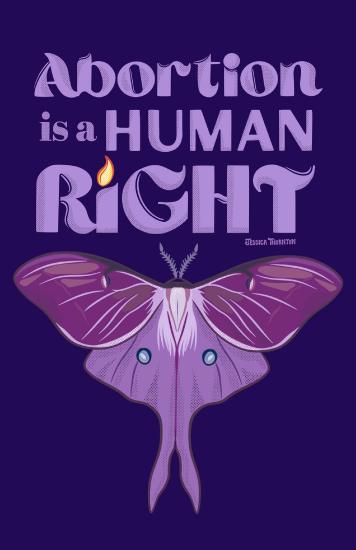
A reproductive justice framing is centered on one’s agency over their reproductive decisions (to have children or not) and access to resources to support their decisions. While mass sterilization programs have taken away someone’s right to have children, on the other hand, even with Roe v. Wade, marginalized communities have faced major challenges to accessing full reproductive services, including abortion.
The Hyde Amendment was enacted in 1976, eliminating any funding of abortion services by the federal government and also denied abortion coverage to military personnel and their families, women who receive care from the Indian Health Services (IHS), and people on disability insurance (Rojas, 2009, p. 97). Smith argues how under the Hyde Amendment, IHS could not offer abortion services unless the woman’s life was in danger or had been impregnated as a result of incest or rape. Since most Native women used services provided by the IHS, the Hyde Amendment was a case of racial injustice. Furthermore, the Native American Women’s Health Education Resource Center (NAWHERC) found that IHS service units were not compliant with their own abortion policies, and 62% did not provide abortions even when the mother’s life was in danger, citing only 5% of service units that actually performed abortions at their facilities (2015, pp. 96 - 97).
According to Ross and Solinger, the author of the Hyde Amendment claimed they saw “an effective opportunity to pass a federal law embedding a religious objection to legal abortion” (2017, p. 53). Yes, there’s justified anger and shock around 2022’s overturning of Roe v. Wade, but when we examine reproductive rights through an intersectional framing, we can understand that for almost fifty years, the Hyde Amendment effectively made access to abortion services under Roe v. Wade ineffectual for poor people and people of color.
Supporters of this amendment often wrote off poor women as “bad choice makers” and “bad mothers'' who required reproductive restrictions, practically criminalizing unintended pregnancies. Such thinking also justified policies that punished poor women by withholding welfare or making them ineligible for any assistance at all. Rojas argues that limited access to reproductive healthcare in fact feeds into racially and sexually charged stereotypes of poor women of color exploiting the system, with a particular characterization coming to light during Ronald Reagan’s failed bid for presidency in 1976: “the welfare queen” (2009, p. 96). He told an overexaggerated story of a woman from Chicago’s South Side who was accused of welfare fraud. Reagan never identified the woman, but he insinuated her racial and class background and the idea of the Black “welfare queen” cheating and abusing the system became quickly enshrined in the media and in the minds of the American public (pp. 96-97).
Another group that continuously face barriers to reproductive care is undocumented people. There is a general fear of policing and surveillance experienced by undocumented immigrants, even in arenas of public welfare, such as schools and hospitals. In 2015, Blanca Borrego, an undocumented Mexican women, presented a false ID at a women’s health clinic outside of Houston, Texas for a routine follow-up. Her rights to patient-doctor privacy were violated and Borrego was reported to the local Sheriff’s deputy and arrested in front of her two daughters. Her daughter, who is a DACA recipient, shared that the deputy told her they were arresting her mom for fake papers and that she would be deported. Events like this and collaboration between health clinics and local police deter other undocumented women from seeing and receiving gynecological healthcare (Gonzalez, 2015).
Furthermore, the highly policed borderlands of places like Southern Texas contribute to disproportionate rates of barriers to reproductive healthcare for Latina/x members of the community. According to a report by Center for Reproductive Rights, Tejanas ages 21-64 are less likely than Latinas nationally and white and Black women in Texas to have received a Pap smear within the last three years. In fact, women living along the Mexico/U.S. border are 31% more likely to die of cervical cancer (Center for Reproductive Rights, 2015, p. 11). Gonzalez (2015) notes that, “Because of the barriers to healthcare, many Latinas die from untreated and undiagnosed cancers at late stages of development. Racism, policing of immigrants, and the recent restrictions on affordable healthcare lead to tragic, preventable deaths.”
Additionally, the near annihilation of abortion services in the state of Texas has now made it virtually impossible for women to access full reproductive care. With the Supreme Court overturning of Roe v. Wade, states are free to prohibit abortion. Senate Bill 8, signed by Governor Greg Abbott (Sep 1, 2021) outlawed abortion at six weeks of gestation, even in cases of rape and incest. Despite organizations like the ACLU and certain law makers challenging such bills, misinformation or frequent changes to policies can confuse everyone about their rights and what resources they have access to. Interstate or international travel for reproductive healthcare is often not an option for undocumented immigrants. In contrast, middle class women with U.S. citizenship will likely face no barriers, including travel, to making reproductive decisions in private.
Criminalization of access to full reproductive care is tied to racist, sexist, and classist false narratives around population. In the 1960s, for example, academics and politicians claimed that a global “population bomb” caused internally by "high birth rates of 'Negroes,'" would lead to major social challenges such as the overcrowding of cities and more crimes. This racist framing completely dismissed the impact of “the apartheid labor system, poor educational systems in poor neighborhoods, and lack of quality medical care as causes of poverty” and instead scapegoated the poor and communities of color, particularly supposed “‘irresponsible females,’ who persisted in having ‘unwanted babies’ that cost the taxpayers too much” (Ross and Salinger, 2017, p. 40).
In reality, poor women did not want more children than middle-class women: the issue was access to contraception. Reports by scholars and public health doctors found that poor women were eager for birth control. In Chicago, most of the patients who sought birth control at Planned Parenthood clinics doubled in the first nine months since opening in 1962. A report from Detroit found that after the 1967 rebellion, a family planning program located in the “heart of the riot area” was left alone, along with a Black church, while surrounding buildings on the block were burned to the ground. Furthermore, the Amalgamated Laundry Workers, made up of mostly African American women, started a free birth control program in the mid-1960s.
Relatedly, when Justice Clarence Thomas recently argued that abortion for Black women is a form of genocide, Dorothy Roberts, legal scholar and reproductive justice activist, quickly corrected this misconception in a 2022 interview. She explained,
Abortion hasn’t been used historically as a form of controlling Black reproduction. Sterilization has. There’s a big difference between forcible sterilization and upholding the human rights to control your body and not be compelled to be pregnant….The billboards that went up [10 years ago] to shame Black women for abortion that said, ‘The most dangerous place for an African American is in the womb’ — that message supports sterilizing Black women, as well as compelling pregnancies. It’s a message about reproductive control. It’s a false message that isn’t about any kind of liberation for Black people (Cineas 2022).
Roberts further clarifies another misconception that abortion is a “white women” issue. She refutes this by stating:
It’s just ridiculous to say it’s a white woman’s issue when Black women are more likely to seek and have abortions. Black women have been advocating for reproductive freedom for just as long as white women have been. We have included the right to abortion in our fight, but it’s just that we haven’t focused on it since we recognize that sterilization, abuse, and being prosecuted for having babies, and Black maternal mortality, and so many other issues involving our reproductive lives are equally as important (Cineas 2022).
Sidebar: Restricting Abortion Access in Mississippi
In this 14-minute report, investigators look into the impacts of abortion restriction on the Black residents of Mississippi: “What Happens When You Restrict Abortion?” by AJ+ (2019). This is a useful video to help you understand the impact of abortion restrictions for marginalized communities. You might also consider what this means in our current post-Roe world.
On the heels of the civil rights and women’s rights movements, the Supreme Court ruling in Roe v. Wade (1973) legalized abortion, prompting women reproductive “choice” (not “right” or “justice”). The decision related the idea of “choice” within “a zone of privacy,” from which women should make reproductive decisions, but women of color activists importantly pointed out that only women with enough resources had access to make these “choices.” For instance, if a woman from a lower socioeconomic background didn’t have access to a doctor, how would they get a prescription for birth control pills? A poor woman might have to decide between using her family’s budget to pay for rent or for an abortion. This is a much narrower set of choices when compared to a middle-class woman, for example, who would be able to pay for an abortion with cash on hand. Women of color activists argued “that the concept of choice masks the different economic, political, and environmental contexts in which women live their reproductive lives,” (Ross and Solinger, 2017, p. 47) hiding the impact of policies and practices that either punish or reward different groups of women as well as the degree to which women have access to health care and resources needed to manage sexual activity, fertility, and motherhood.
Andrea Smith cites Native American activist Justine Smith who stated that the framing of the reproductive rights movement on individual “choice” essentially
obscures all the social conditions that prevent women from having and making real choices - lack of health care, poverty, lack of social services, etc....In the Native context, where women often find the only contraceptives available to them are dangerous….where their life expectancy can be as low as 47 years, reproductive "choice" defined so narrowly is a meaningless concept. Instead, Native women and men must fight for community self-determination and sovereignty over their health care (2015, p. 98).
Formation of the Reproductive Justice Movement
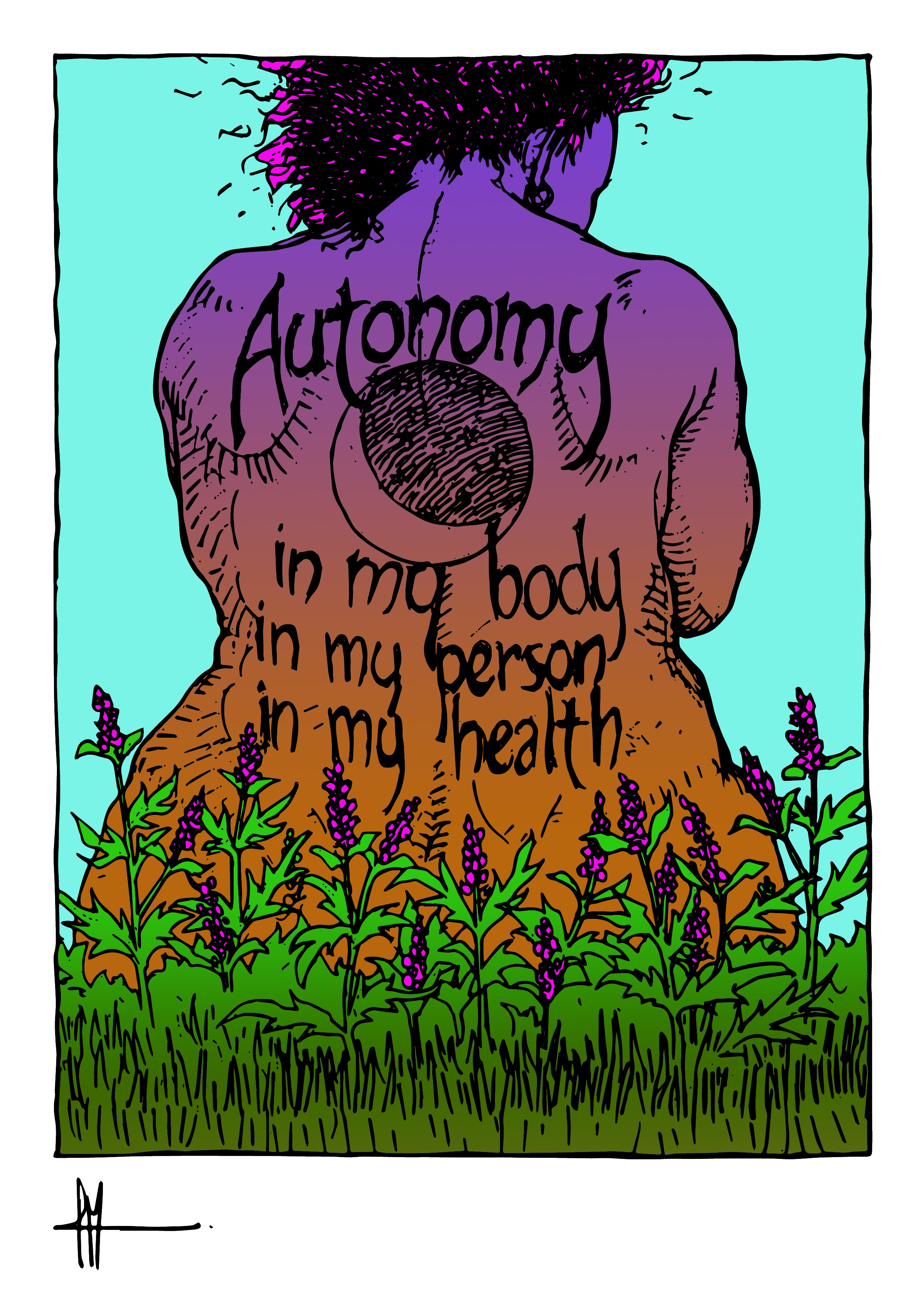
(Licensed under CC BY-NC-ND 3.0; by Fernando Martí)
By the 1990s, various women of color organizations who had been critiquing the limitations of a “choice-framed” reproductive movement started coming together. Organizations like SisterSong (Atlanta) and the National Black Women’s Health Project highlighted the long history of reproductive injustice experienced by women of color:
They underscored the lived experience of the enslaved woman who could be raped and impregnated with impunity….They invoked the massacred Native populations. They catalogued the ways that law could mandate a woman’s sterilization, could punish her for having a child, could enforce her poverty and punish her for it, could exclude her from hospitals and her children from schools and jobs, based on race. They added that laws had blocked women from immigrating to this country to join their husbands, to make families and citizens. The law could criminalize birth control and punish a woman for trying to manage her fertility. The law and other instruments of power could use this woman’s body and her fertility to degrade her and her children…and protect white supremacy in the United States. In the context of such histories, such laws and policies, what role did individual, personal choice have in safeguarding the reproductive dignity and safety of women of color (Ross and Solinger, 2017, pp. 54 - 55)?
Smith wrote that Native women are organizing around a more “holistic analysis of reproductive justice.” For example, NAWHERC provides comprehensive services to Indigenous women related to reproductive health including contraception information, advocacy for the environment, violence against women, and advocacy for access to abortion services (2015, pp. 105-106).
Reproductive justice activists objected to the single-issue framing of the white-led movement and pushed that the right to have a child was just as important as access to contraception and abortion. They also identified the limits of the legal system that failed to address the overlapping structures of inequality, including access to political power. They instead offered a framing that centered on “reproductive safety and dignity,” including access to decent healthcare and housing, jobs that paid a living wage, the right to live a life without worry of police violence, the right “to live free of racism,” in addition to access to legal contraception and abortion (Ross and Solinger, 2017, pp. 55 - 56). The first activists of this movement illustrated the importance of bodily self-determination - the right to reproduce or not to.
Applying an intersectional analysis, the burgeoning reproductive justice movement organized with the environmental justice movement, studying the effects of toxic waste in certain communities of color on reproduction, infants and maternal health (Ross and Solinger, 2017, pp. 56-57). They pushed for the inclusion of women in public health information and treatment of AIDS by the Centers for Disease Control, and helped end various attempts to restrict or ban abortions in states across the nation. They have advocated for antidiscrimination policies that would protect LGBTQ people, and voluntary hormone therapy for incarcerated trans people. Ross and Solinger (2017) point out that collectively, “reproductive organizations and their allies have refocused and redefined the basic elements of sexual and reproductive dignity for all” (p. 57).
In the aftermath of the Supreme Court decision to overrule Roe v. Wade, Dorothy Roberts stated that despite still being shaken by this ruling, in many ways, the reproductive justice movement was preparing for such a “post-Roe” world. She reminded us that today, “there’s a reproductive justice movement that’s so much stronger….it seems like we’re going backward while at the same time building movements that are so much further than we were when we were growing up” (Cineas, 2022). The work by women like Ross, Solinger, Roberts, and countless others who’ve committed decades to the reproductive justice movement remind us how an intersectional lens can help us understand how seemingly oppositional issues are actually interrelated. And when we understand this, we can envision a society rooted in recognizing one another’s humanity. We can take active steps toward demanding sexual autonomy and gender freedom, and achieving the core principles of the reproductive justice movement:
- the right not to have a child
- the right to have a child
- and the right to parent children in safe and healthy environments (Ross and Solinger, 2017, p.65).

No comments:
Post a Comment