Garveyism
Reflection on Garveyism, Black Power, and the Civil Rights Movement
This reading helped me understand the importance of Marcus Garvey, Garveyism, and the broader struggle for Black liberation. It also helped me see how ideas like Black Power, Black Nationalism, and Pan-Africanism connect to the Civil Rights Movement. The chapter shows that Black freedom movements did not come from one person or one moment. They came from many people, many places, and many generations. These movements were built through pride, resistance, community, and courage.
Marcus Garvey is one of the most important figures discussed in the reading. He was born in Jamaica in 1887 and lived in Jamaica, England, and the United States. This already shows how global his life and ideas were. Garvey believed that Black people around the world shared a common history and destiny. He encouraged people of African descent to see themselves as part of one global community. This idea became known as Pan-Africanism. Pan-Africanism teaches that unity among Black people worldwide can lead to political strength, economic independence, and cultural pride.
Garveyism focused on pride, empowerment, and economic self-sufficiency. Garvey wanted Black people to control their own institutions, businesses, and futures. He believed that relying on systems controlled by white supremacy would never bring true freedom. Instead, he encouraged Black communities to invest in themselves. His speeches and writings inspired millions of people across the African diaspora. Even though Garvey lived in the early 20th century, his ideas continued to influence later movements, including the global fight against apartheid in South Africa.
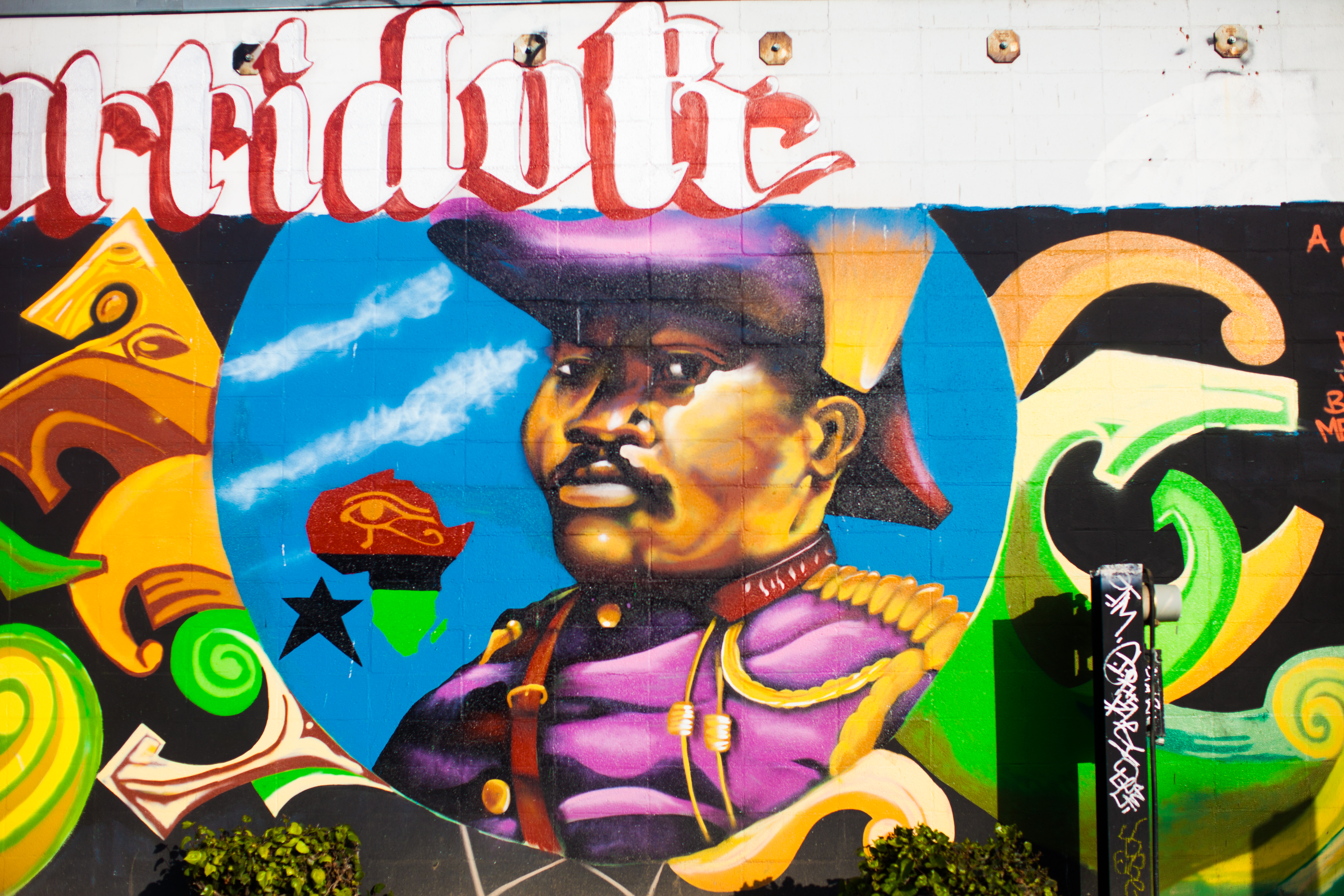
The mural of Marcus Garvey in Oakland, California, shows him in a military-style outfit with a royal purple color. This image represents strength, leadership, and pride. It shows that Garvey is still remembered as a symbol of radical Black advocacy. Garvey’s life ended in 1940, when segregation was still legal in the United States. He did not live to see many of the changes he hoped for. Still, his ideas laid an important foundation for future activists and scholars.
The reading explains that two important political frameworks connected to Garveyism are Black Power and Black Nationalism. Black Power emphasizes building institutions that serve Black communities. It also focuses on leadership, self-defense, and independence. The term “Black Power” was made famous by Stokely Carmichael in 1966. It represented frustration with slow progress and continued violence against Black people. Black Nationalism emphasizes pride in Black identity, economic self-sufficiency, and sometimes separation from white-dominated systems.
Both Black Power and Black Nationalism connect strongly to Garveyism. Garvey believed that Black people should define themselves instead of being defined by others. He rejected the idea that Black people needed white approval to succeed. This message was powerful, especially in a world shaped by racism and colonialism. These ideas helped many people reclaim dignity and confidence.
The reading then moves to the Civil Rights Movement. It explains that during the 1940s and 1950s, Black communities organized against Jim Crow laws and racial segregation. These laws controlled almost every part of life, including schools, jobs, housing, voting, and public spaces. Black people were denied basic rights and faced violence with little protection from the law. This made daily life dangerous and exhausting.
One important point in the reading is the role of women in the Civil Rights Movement. Women worked directly in communities. They organized food, housing, education, and care. Churches played a major role by providing space and support. Women built the foundation of the movement. However, formal leadership positions often went to men. Charismatic male leaders like Dr. Martin Luther King Jr. became the public face of the movement. While MLK was an important leader, the reading reminds us that he was not alone. Many women and local organizers made the movement possible.
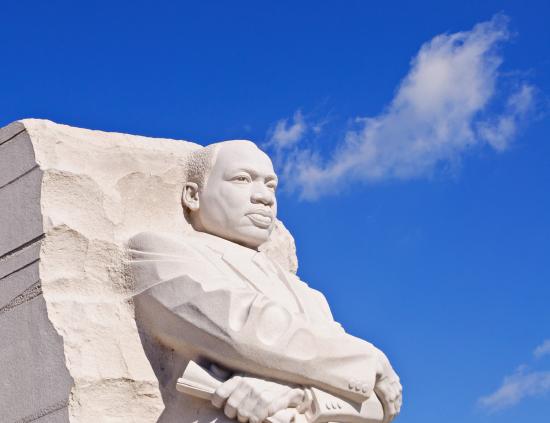
The statue of Martin Luther King Jr. in Washington, D.C., shows how history often highlights certain figures while overlooking others. The reading encourages readers to look beyond famous names. It asks us to recognize the collective effort behind social change. This helped me realize that movements succeed because of ordinary people doing extraordinary work.
The Student Nonviolent Coordinating Committee (SNCC) is another important part of the reading. SNCC was founded in 1960 and focused on direct action. They organized sit-ins, Freedom Rides, and voter registration drives. SNCC believed in nonviolence but also believed in justice and love. Their statement of purpose shows that they wanted to change not only laws but also moral values. They believed that justice should be rooted in community and care.
One of the most powerful figures discussed in the reading is Fannie Lou Hamer. She was born in Mississippi in 1917 and grew up as a sharecropper. She faced poverty, racism, and violence. Despite this, she became a strong civil rights leader. She helped Black people register to vote and spoke openly about the terror used to stop them. Hamer endured beatings, medical abuse, and threats. Still, she continued to speak out.
Fannie Lou Hamer co-founded the Mississippi Freedom Democratic Party (MFDP) in 1964. This was a response to the Democratic Party in Mississippi excluding Black people. The MFDP challenged the legitimacy of the all-white delegation at the National Democratic Convention. This was a bold and risky move. It exposed the hypocrisy of American democracy. Hamer’s testimony showed the nation how Black citizens were denied basic rights.
Hamer believed that leadership should be shared. She did not believe in one person holding all the power. Her famous quote, “Nobody’s free until everybody’s free,” shows her vision. She believed liberation must include everyone. This idea connects to Garveyism and Pan-Africanism. It also connects to modern movements for justice. Hamer’s speech in 1971 shows how deeply personal activism can be. Her house was bombed because she spoke out. This shows the real danger activists faced.
What stood out to me most in this reading is the idea of collective struggle. Garvey, King, Hamer, and SNCC all worked in different ways. Some focused on global unity. Some focused on legal change. Some focused on community care. All of them believed that Black people deserved dignity, safety, and power. The reading shows that Black Studies helps us understand these connections. It helps us see patterns of resistance and resilience.
This reading also helped me understand that freedom is not just about laws. It is about economic security, cultural pride, and community strength. Garveyism emphasized economic independence. The Civil Rights Movement emphasized voting and desegregation. SNCC emphasized direct action. Hamer emphasized shared leadership and truth-telling. All of these approaches mattered.
Overall, this reading taught me that Black liberation is a long and ongoing struggle. It did not begin with one leader, and it did not end with one law. It requires courage, unity, and imagination. Garveyism reminds us to dream big and think globally. The Civil Rights Movement reminds us to organize locally and demand justice. Figures like Fannie Lou Hamer remind us that ordinary people can change history. This reflection helped me appreciate the depth, complexity, and power of Black freedom movements.
Works Cited
Espinoza-Kulick, Mario Alberto Viveros, and Teresa Hodges. Garveyism. ASCCC Open Educational Resources Initiative (OERI), CC BY-NC 4.0.
Robnett, Belinda. How Long? How Long?: African-American Women in the Struggle for Civil Rights. Oxford University Press, 1997.
The Civil Rights Movement

No comments:
Post a Comment