Reflection on “9.5: Counternarratives in Racial Wealth Disparities”
In “9.5: Counternarratives in Racial Wealth Disparities,” Ulysses Acevedo explains that racial wealth inequality is not only a story of oppression. It is also a story of resistance. The chapter shows that many communities have challenged unfair systems in education, housing, and the economy. These counternarratives are important because they fight against the dominant “master narrative” that often blames poor communities for their own struggles. Acevedo shows that people have organized, protested, built schools, and demanded reparations. These actions prove that racial wealth inequality is not natural. It is created by systems, and people have always pushed back against those systems.
The chapter starts by naming several movements that fought for educational justice. Acevedo mentions the East L.A. Chicano walkouts, the Black Panther Party’s Oakland Community School, and the Third World Liberation Front. These movements share a common purpose. They wanted control over education. They wanted students to be treated with dignity. They wanted relevant curriculum. They wanted teachers who understood their communities. They wanted schools to serve students rather than harm them. This focus on education is important because education is closely connected to wealth. If schools fail students, it becomes harder to access college, stable work, and higher income. If schools support students, it can open pathways to better jobs and more wealth-building opportunities.
The East L.A. Chicano Blowouts in 1968 are one powerful example. Acevedo explains that Mexican American students walked out of high schools in Los Angeles to protest unfair treatment. They faced corporal punishment. They were punished for speaking Spanish. They did not have basic access to bathrooms during school hours. Their curriculum did not reflect their history or community. Many teachers did not share their background. Students were also placed into “educational tracking,” which often pushed them toward low-level classes and away from college preparation. The walkouts were organized by students and supported by a teacher named Sal Castro. This movement mattered because it was peaceful, collective, and brave. It showed that students could demand respect and change. It also helped grow the larger Chicano movement. When I read about this, I thought about how schools can create inequality by treating some students as less capable or less valuable. The walkouts remind me that young people are not powerless. They can speak up when systems are unfair.
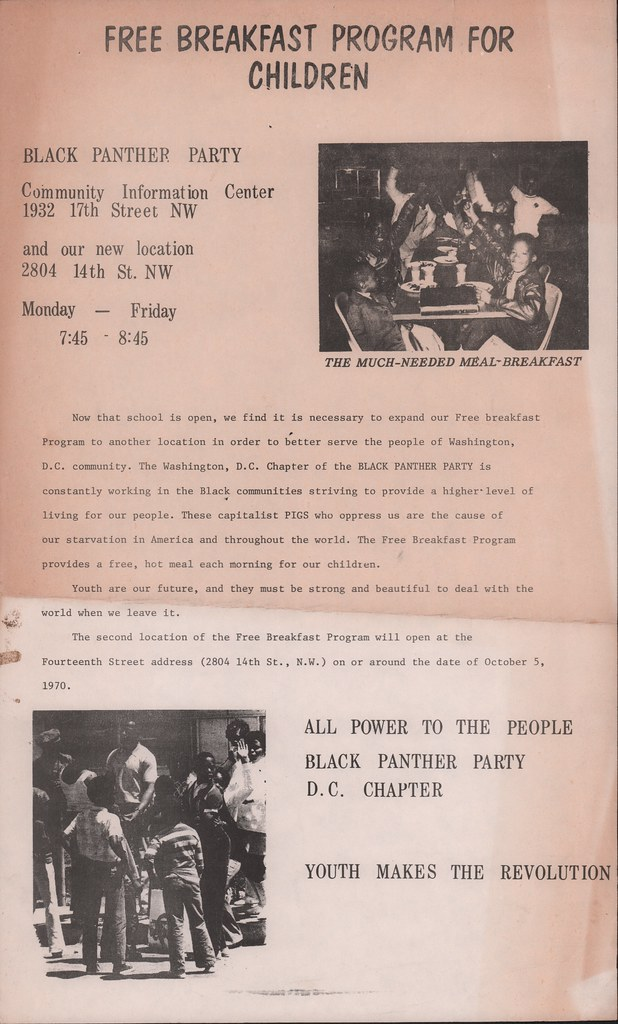
The chapter then discusses the Black Panther Party and its impact on education in Oakland. Many people know the Black Panther Party only through stereotypes. Acevedo challenges that limited view. He explains that the Panthers reimagined education and built community programs. In 1973, they created the Oakland Community School (OCS) in East Oakland. It was directed by Ericka Huggins and Donna Howell. The school operated until 1982. It was created because public schools in Oakland were underfunded and neglected. The Panthers wanted a school that offered liberatory education. This school is an important counternarrative because it shows that communities can build better systems when the state fails them.
Acevedo includes Point 5 of the Black Panther Party’s 10 Point Platform. The Panthers wanted education that exposes the true nature of American society. They wanted education that teaches true history. They believed people need knowledge of self and knowledge of their social position. This is powerful because it connects education to identity and empowerment. If students never learn their own history, they may feel invisible or inferior. If they learn their history, they may gain pride and motivation. This is also connected to Ethnic Studies. Ethnic Studies challenges the master narrative by including stories that were erased.
The Oakland Community School also supported students in many ways. Acevedo explains that OCS provided meals, including breakfast, lunch, and dinner. It focused on mental health through meditation and mindfulness. It also offered martial arts and peer-led justice committees. This shows that education is not only academics. It is also care, safety, and community support. The school gave students role models from their own community. That matters because representation shapes how students see their future. This part of the chapter made me reflect on what “quality education” really means. It means resources, safety, respect, mental health support, and meaningful learning. Wealth inequality often takes those things away from underfunded schools. OCS shows what can happen when a community refuses to accept neglect.
The chapter also discusses Historically Black Colleges and Universities (HBCUs). Acevedo explains that the first HBCU was Cheyney University of Pennsylvania in 1837. Many HBCUs were created after the Civil War because Black Americans were excluded from white institutions. HBCUs became places of access, leadership, and community. They played a major role in Black education and social mobility. The chapter also notes that many HBCUs need major funding to repair buildings and meet safety codes. This reminds me that inequality can also appear in institutional resources. Even when Black institutions create opportunities, they still face financial barriers because of long histories of underfunding.
Acevedo then connects these historical counternarratives to the legacy of Ethnic Studies today. He asks an important question: how do we teach students in underfunded schools effectively? Underfunded schools may struggle to recruit teachers, access technology, and provide extracurricular opportunities. However, some schools use creative strategies. They use culturally relevant pedagogy. They hire teachers of color from similar backgrounds. They reduce police presence and look for supportive alternatives. This section shows that education reform is not only about money. It is also about values and teaching methods.
The chapter discusses California’s AB 101, which requires high school students to take one semester of Ethnic Studies before graduation. This is a major policy change. It reflects the idea that curriculum matters. Ethnic Studies can help students see themselves in school. It can also help all students understand history more honestly. Acevedo also mentions a Stanford University study about Ethnic Studies in the San Francisco Unified School District. The study found positive effects. Ethnic Studies courses improved attendance for at-risk students. They improved grades and credits earned. They increased graduation rates and college enrollment. The study also explained these courses as a psychological intervention. Ethnic Studies can create a sense of belonging. It can affirm personal values. It can warn students about stereotypes so they are not harmed by them. This part of the chapter stood out to me because it shows that changing curriculum can have real outcomes. It is not only political. It is practical. When students feel seen and respected, they do better.
The chapter also discusses Occupy Wall Street (OWS). Acevedo explains that this movement began in 2011 in Manhattan and spread globally. The slogan “We are the 99 percent” challenged the power of the richest 1 percent. OWS protested major banks and corporations and their influence on politics. The movement criticized the role of Wall Street in creating economic collapse and recession. It also supported goals like better jobs, fairer income distribution, bank reform, student loan forgiveness, and stopping home foreclosures. This is an important counternarrative because it shows that wealth inequality is not only racial. It is also class-based. However, class inequality and racial inequality often overlap. Many communities of color are more likely to experience poverty because of historical discrimination. Occupy Wall Street helped bring wealth inequality into public discussion. It made the “1 percent” a common idea in society.
The chapter ends with the ongoing struggle for reparations. Acevedo uses Ta-Nehisi Coates’s argument from “The Case for Reparations.” Coates lists centuries of harm: slavery, Jim Crow, separate-but-equal, and racist housing policy. His point is that America has a moral debt that has not been paid. Reparations means repairing past injustice through resources or money. Acevedo explains that reparations were discussed after emancipation through the idea of “40 acres and a mule.” Reparations were also proposed again in later years, including the 1890s and during the Black Power movement. The chapter explains that reparations remain controversial and politically difficult. Still, the argument continues because the economic harm was real and large.
This section made me reflect on what “justice” means. Many people think apologies are enough. But apologies do not restore wealth that was stolen. They do not close the gap created by centuries of unpaid labor and blocked opportunities. The chapter mentions that Congress apologized for slavery and Jim Crow, and some states also apologized. But apologies do not change material conditions. Reparations is a difficult conversation because it raises questions about responsibility, payment, and who qualifies. But the chapter shows that it is also a necessary conversation if society wants true equity.
Acevedo mentions California as a leading place in reparations discussions. This shows that the conversation is not only academic. It is happening in politics and policy. It also shows that states can take action even if the federal government does not. This gives hope that change can happen in steps. It may not be perfect, but it can begin.
Overall, this chapter helped me understand the importance of counternarratives. Counternarratives show that marginalized communities have always resisted. They have built schools, organized protests, created educational programs, and demanded structural change. These stories challenge the idea that inequality is caused by laziness or poor choices. Instead, they show that communities are fighting systems that were designed to exclude them. Counternarratives also give hope. They show that people can create alternatives when institutions fail.
This chapter also helped me see that education is deeply connected to wealth. When schools punish students for language, track them into low-level classes, or erase their history, they reduce students’ future opportunities. When communities create culturally relevant schools and Ethnic Studies courses, students gain belonging and motivation. This can improve achievement and open doors to better jobs and financial stability.
In conclusion, “Counternarratives in Racial Wealth Disparities” shows that racial wealth inequality is real, but resistance is also real. The chapter highlights movements like the East L.A. Chicano walkouts, the Black Panther Party’s Oakland Community School, and the growth of Ethnic Studies. It also shows broader movements like Occupy Wall Street and the continuing push for reparations. These counternarratives remind us that systems can be challenged. They also remind us that justice requires both recognition and repair. Reading this chapter made me feel that learning these histories is important because they show how change happens. Change happens when people organize together, tell the truth, and refuse to accept inequality as normal.
Works Cited
Acevedo, Ulysses. “9.5: Counternarratives in Racial Wealth Disparities.” ASCCC Open Educational Resources Initiative (OERI), CC BY-NC.
Coates, Ta-Nehisi. “The Case for Reparations.” The Atlantic, 2014.
Clement, Priscilla, and Nomi Lidsky. “The Danger of History Slipping Away: The Heritage Campus and HBCUs.” 2011.
Dreilinger, Danielle. “Ethnic Studies Boosts Student Outcomes.” 2021.
Ealey, et al. [Black Panther Party 10 Point Platform reference], 2016.
Karlamangla, Soumya. “California AB 101 Ethnic Studies Graduation Requirement.” 2021.
NAACP. “History of Reparations and 40 Acres and a Mule.” 2019.
Occupy Wall Street. “About the Movement.” occupywallst.org, 2022.
9.5: Counternarratives in Racial Wealth Disparities



Counternarratives

No comments:
Post a Comment